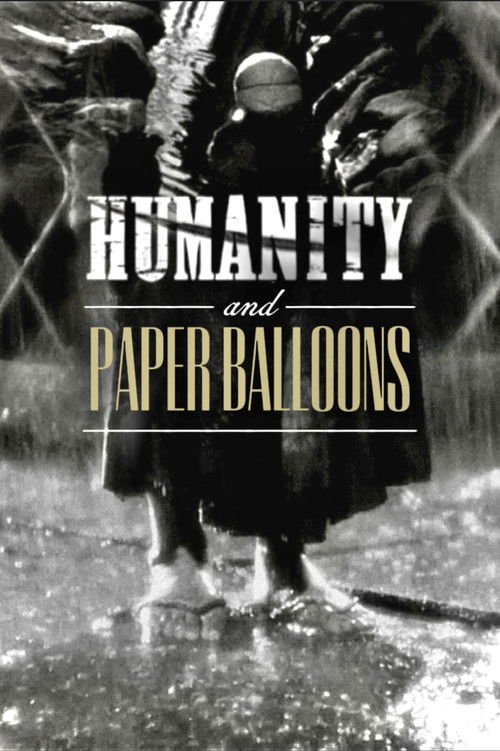
Humanity and Paper Balloons
1937
No user ratings available yet
Representation score: 5.7 out of 10

Representation Score
Excellent
1960
Director
Tomu Uchida
Runtime
109 minutes
Average Rating
No ratings yetNew Showbiz Analysis
Tomu Uchida’s drama excels by giving underrepresented characters a significant role in driving the story. The film avoids simplistic moral binaries, using the protagonist's physical difference and the courtesan's social standing to explore human connection against systemic rigidity. The film’s strength lies in its refusal to reduce its characters to stereotypes. Tamarazu stands out as a disruptor of traditional gender roles, while the industrialist’s disability is used to explore empathy rather than tragedy. However, the film remains confined to a traditional romantic storyline and a culturally homogeneous setting. It delves deeply into class and social stratification but lacks explicit representation of LGBTQ+ identities.
Category Breakdown
The story focuses on a heterosexual romance between an industrialist and a courtesan. Though it doesn't explicitly include queer identities, the setting of Yoshiwara allows for a subtle exploration of non-traditional social arrangements.
Tamarazu challenges traditional gender roles by serving as the emotional heart of the narrative. Her bold tenderness defies submissive femininity, positioning her as an active force of compassion rather than a passive figure.
The film portrays a culturally uniform Japan, emphasizing internal social divisions rather than ethnic differences. The tension between rural and urban life provides a nuanced look at identity beyond simple ethnicity.
The narrative criticizes strict social hierarchies and traditional institutions. By prioritizing human connection over formalities, it highlights systemic barriers within the established social order through the lens of the Yoshiwara district.
The protagonist's disfiguring birthmark is a central theme used to explore perception and empathy. The film handles his physical difference respectfully, treating it as a lived reality that contributes to his social isolation.
Present on Screen
Limited or Absent
Official Synopsis
A successful textile industrialist from the provinces, who is beloved by his employees for his kindness, cannot find a wife because of a disfiguring birthmark on his face. Even the courtesans in Yoshiwara refuse to entertain him, until an indentured peasant prostitute, Tamarazu, takes the unsavoury assignment and treats him with brash tenderness.
1937

1956
1995

1965
1983

1998
2022

1981
No reviews yet. Be the first to share your thoughts on this movie!
Use the rating form above to leave a star rating and optional review.