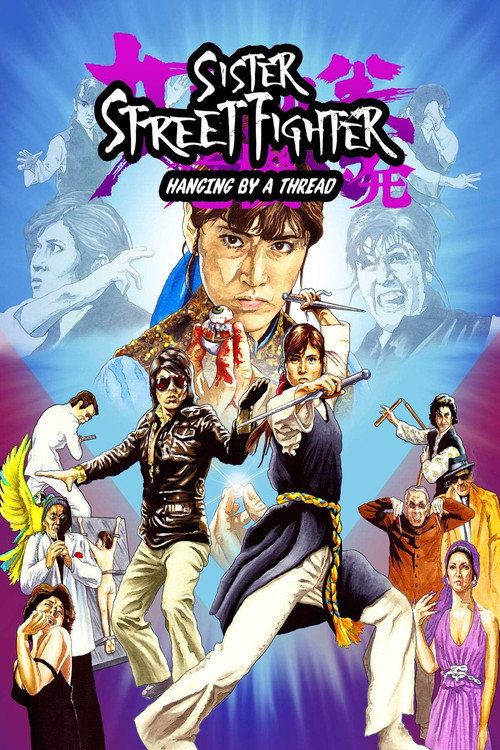
Sister Street Fighter: Hanging by a Thread
1974
No user ratings available yet
Representation score: 7.1 out of 10

Representation Score
Fair
1975
Not RatedDirector
Kazuhiko Yamaguchi
Runtime
80 minutes
Average Rating
No ratings yetNew Showbiz Analysis
The film's strength lies in its gender-focused narrative, which centers a female protagonist in a traditionally male-dominated action genre. This challenges the usual gender norms. However, the lack of diverse racial, LGBTQ+, or systemic critiques limits its overall impact. Despite the strong female lead, the film misses opportunities for broader representation. Overall, it stands out for its gender-based empowerment while maintaining a traditional commercial format.
Category Breakdown
The film does not include explicit LGBTQ+ characters or non-straight relationships. It follows the typical action movie structure of the 1970s, focusing on physical conflicts rather than exploring identity issues.
The story challenges traditional gender roles by featuring a female protagonist who dominates physically and tactically. She takes control of the narrative, subverting the usual passive roles for women.
With a predominantly Japanese cast, the film emphasizes Japanese cultural identity through its martial arts style. It does not blend multiple cultures.
The plot revolves around stylized vigilantism, focusing on individual justice quests rather than critiquing Western institutions or systemic issues.
The film does not depict characters with physical or cognitive disabilities. The characters are primarily defined by their combat skills and physical abilities.
Present on Screen
Limited or Absent
Official Synopsis
When Koryu's childhood friend Shurei is abducted by gangsters, the desperate young woman recruits a female martial artist and a tough-as-nails stranger to join her for a dangerous rescue mission.
1974
1974

1974

1973
1976

1974

1975
1972
No reviews yet. Be the first to share your thoughts on this movie!
Use the rating form above to leave a star rating and optional review.