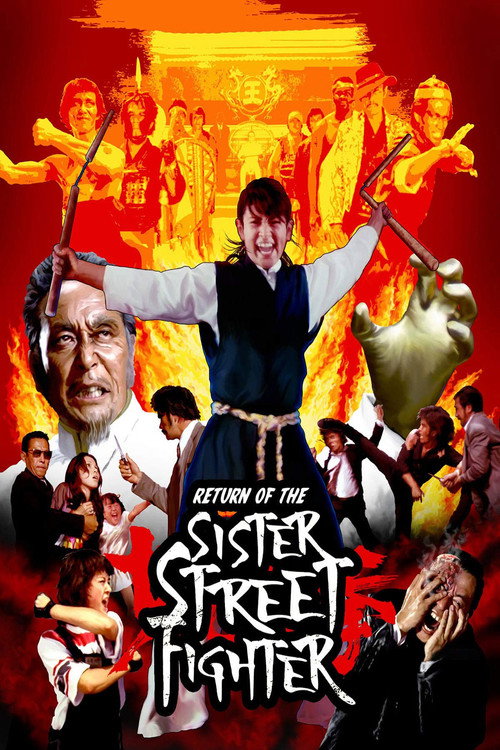
The Return of Sister Street Fighter
1975
No user ratings available yet
Representation score: 4.4 out of 10
Representation Score
Good
1974
RDirector
Kazuhiko Yamaguchi
Runtime
86 minutes
Average Rating
No ratings yetNew Showbiz Analysis
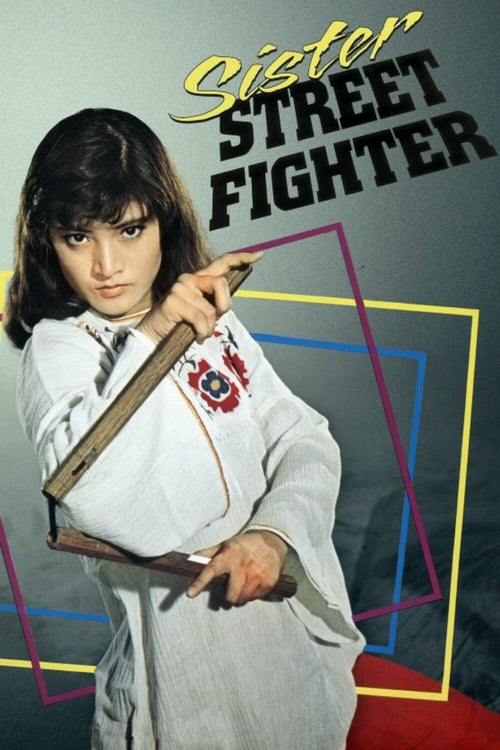
Sister Street Fighter stands out as a radical disruption of the male-dominated martial arts genre. By centering a female protagonist who drives the action through physical dominance, the film effectively deconstructs traditional gendered power dynamics. While the film is demographically limited by its era and setting, its cultural depth is found in its celebration of rebellion. The narrative prioritizes personal codes of justice over rigid societal morality, offering a sophisticated critique of mainstream institutions. However, the film’s scope is narrow regarding the way different parts of someone's identity overlap. It lacks LGBTQ+ representation and disability narratives, focusing instead on a culturally homogeneous cast and the physical perfection of its combatants.
Category Breakdown
The film does not include explicit LGBTQ+ characters or relationships. Its focus is on family ties and female-led gang hierarchies, rather than queer identity.
Meiko Kaji’s protagonist challenges traditional hierarchies by dominating high-stakes combat. The film replaces the 'damsel in distress' cliché with a model of female autonomy and physical strength.
The cast is culturally homogeneous, reflecting the urban Japanese setting. While it lacks diverse representation, it maintains authenticity to its localized milieu without whitewashing.
The story celebrates the 'delinquent' archetype and rebellion against social structures. It frames the rejection of institutional authority as a form of personal empowerment and self-determination.
Characters are defined by physical prowess and martial capabilities. There are no meaningful depictions of visible or invisible disabilities within the primary character arcs.
Present on Screen
Limited or Absent
Official Synopsis
Li Mansei is a martial-arts champion turned undercover agent. When he is captured by a drug lord, his sister Li Koryu turns to his former martial-arts school, including the powerful Sonny Kawasaka, for help in the inevitable battle royale.
1975
1974
1976
1974
1974

1972
1974
1974
No reviews yet. Be the first to share your thoughts on this movie!
Use the rating form above to leave a star rating and optional review.