
Escape to Berlin
1961
No user ratings available yet
Representation score: 4.7 out of 10
Representation Score
Limited
1963
Director
Rolf Hädrich
Runtime
95 minutes
Average Rating
No ratings yetNew Showbiz Analysis
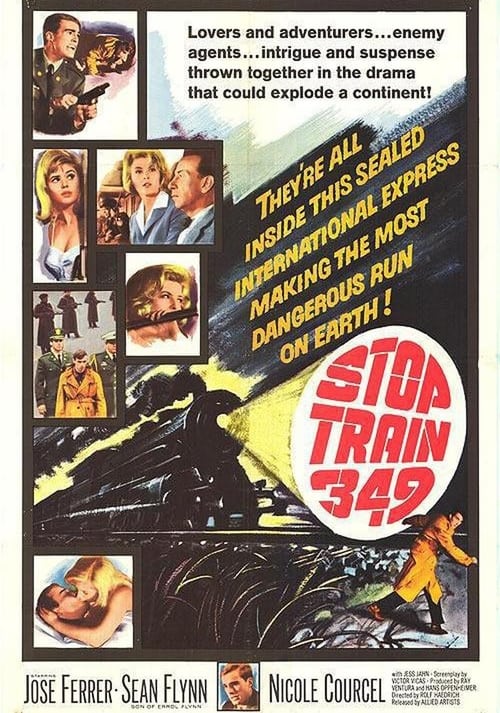
Stop Train 349 is a political drama set during the Cold War that emphasizes the tension between individuals and the state. It focuses on systemic power dynamics and the restrictive nature of Cold War borders. However, the film lacks diversity in terms of race, gender, and LGBTQ+ identities. The narrative centers on a male protagonist and a specific German setting, limiting its broader social representation. Despite this, the film effectively examines the impact of political institutions and remains relevant to its historical context.
Category Breakdown
The film does not include any explicit LGBTQ+ characters or stories. The main focus is on Cold War geopolitical tensions and survival strategies, rather than critiquing traditional heterosexual relationships.
The main character is a male protagonist who leads a dangerous escape attempt. Women are mostly in supporting roles, reflecting the typical gender roles of the 1960s.
The cast and setting appear to be predominantly of the same ethnicity, fitting the specific German context of the time. There is no indication of a diverse cast.
The story strongly criticizes the divisions created by institutions and the control of transit by the state. It highlights the conflict between personal freedom and the oppressive systems of Cold War bureaucracy.
The film does not feature any characters with disabilities as central plot devices. There is no apparent mockery of individuals with disabilities.
Present on Screen
Limited or Absent
Official Synopsis
Cold War drama about an East German man trying to escape to the West via a U.S. military train passing through the Soviet Occupation Zone of Germany.
1961

1977

1988

1945

1962

2000

1950

1983
No reviews yet. Be the first to share your thoughts on this movie!
Use the rating form above to leave a star rating and optional review.