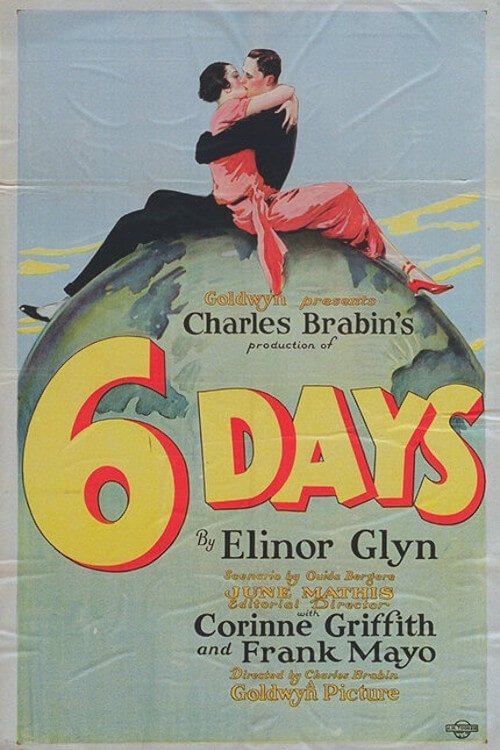
Six Days
1923
No user ratings available yet
Diversity score: 3.2 out of 10

1926
Director
José Buchs
Runtime
62 minutes
Average Rating
No ratings yetSynopsis
A young woman abandoned by her lover sells her body to his mentor, a renowned sculptor.
Overall Score
Limited
Category Breakdown
LGBTQ+ Representation
The film centers on a heterosexual romantic conflict involving abandonment and transactional intimacy. There is no evidence of non-cisnormative identities or narratives that challenge heteronormativity.
Gender Representation
A woman drives the plot through her decision to sell her lover's body. However, her agency is framed by economic desperation and traditional gendered power dynamics.
Racial & Ethnic Diversity
The film reflects the demographic norms of the 1920s Argentine film industry. There is no evidence of intentional racial blending or the disruption of Eurocentric casting standards.
Religious & Cultural Diversity
The narrative utilizes themes of betrayal and social consequence common to early 20th-century melodrama. It operates within the moral frameworks of the era rather than offering systemic critique.
Disability Representation
The available synopsis does not identify any characters with visible or invisible disabilities.
Strengths
Areas for Improvement
AI Analysis
Pilar Guerra is a classic silent-era melodrama that adheres to the social hierarchies and traditional tropes of 1920s Argentina. While the story is driven by a female protagonist, her actions are dictated by desperation and the consequences of male abandonment. The film lacks intersectional complexity, focusing instead on individual interpersonal morality. It functions as a product of its time, reflecting the conventional narrative structures and demographic norms of the early Latin American film industry.
1923
1937
1947

1948
1932
1951

1949

1929
1946

1972
1959
1979
No reviews yet. Be the first to share your thoughts on this movie!
Use the rating form above to leave a star rating and optional review.