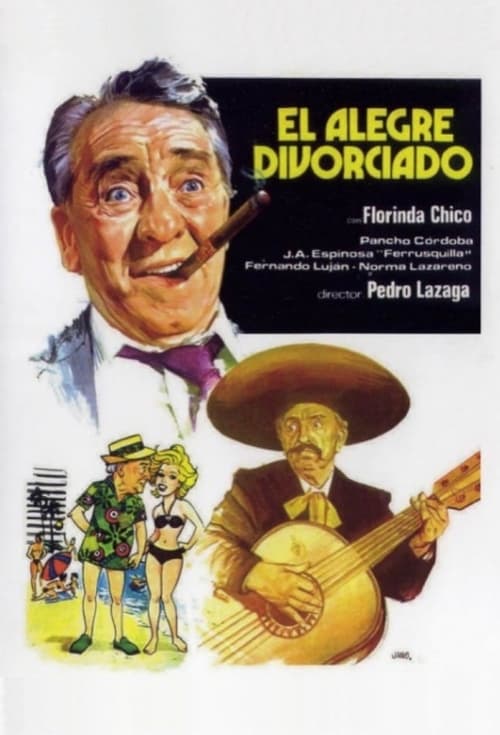
El alegre divorciado
1976
No user ratings available yet
Representation score: 1.6 out of 10
Representation Score
Limited
1977
Director
Pedro Lazaga Sabater
Runtime
95 minutes
Average Rating
No ratings yetNew Showbiz Analysis
The film is a product of its specific historical moment, functioning as a traditional comedy. It explores the friction between individual control and established religious institutions in 1970s Spain. The narrative structure emphasizes the maintenance of social and religious norms. It focuses on a heterosexual crisis rather than deconstructing traditional hierarchies or exploring diverse identities. Ultimately, the film serves as a period piece that highlights the importance of religious identity and domestic stability during a time of strict social constraints.
Category Breakdown
The story centers around a heterosexual relationship, with no representation of LGBTQ+ identities or critiques of the assumption that everyone is straight or cisgender.
The female protagonist drives the plot through her pregnancy, while the male protagonist's religious struggle remains central. The film follows traditional 1970s gender roles.
An American student adds a brief international element, but the narrative remains focused on a domestic Spanish context without a multi-ethnic cast.
The film reflects the social constraints of pre-divorce Spain, portraying the tension between religious dogma and civil necessity without explicitly criticizing religious institutions.
There are no visible or invisible disabilities depicted that affect the character arcs or the narrative progression.
Present on Screen
Limited or Absent
Official Synopsis
Miguel is a young Spanish naval engineer in love with an American student of History of Art. When she becomes pregnant, she decides that the easiest solution to her situation is to marry her civilly. However, in Spain in the 1970s, prior to the passage of the Divorce Law, the only way to do so is to apostatize the Catholic Church. For Miguel, a believing devotee, taking this step involves a deep inner conflict.
1976
1961
1982
1969
1973

1972
1971
1968
No reviews yet. Be the first to share your thoughts on this movie!
Use the rating form above to leave a star rating and optional review.