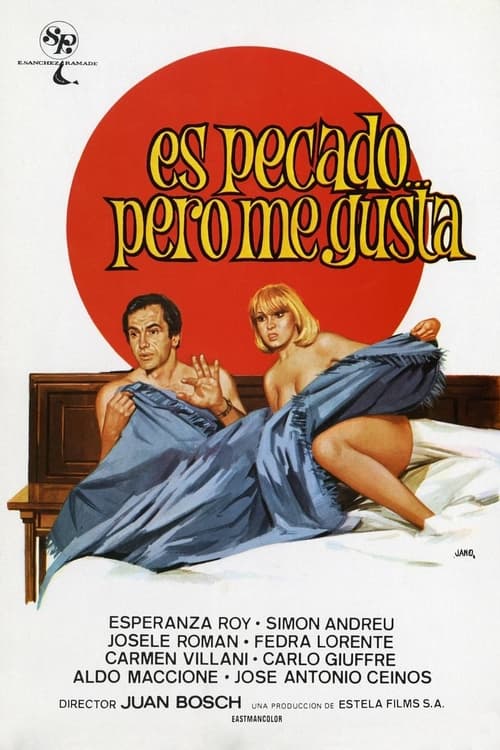
Es pecado... pero me gusta
1978
No user ratings available yet
Diversity score: 4.9 out of 10

1982
Director
Juan Bosch
Runtime
88 minutes
Average Rating
No ratings yetSynopsis
David is married and has no children. However, outside of marriage, he has longstanding relationships with Susi and Laly, with whom he has had a child with each. He has promised both of then, separately of course, that when the divorce is permitted in Spain he will separate from his wife and regularize his situation with them. Divorce law is approved and conflicts begin. He cannot marry the two together.
Overall Score
Fair
Category Breakdown
LGBTQ+ Representation
The film lacks explicit LGBTQ+ characters or non-cisnormative identities. The narrative focuses entirely on heteronormative domestic structures and the complexities of extramarital relationships.
Gender Representation
The plot disrupts patriarchal expectations by centering on a man's inability to maintain traditional domestic hierarchies. Susi and Laly demonstrate agency by navigating long-term relationships outside formal marriage.
Racial & Ethnic Diversity
The film appears to operate within a homogeneous social framework typical of era-specific Spanish domestic comedies. There is no evidence of diverse or intersectional racial dynamics.
Religious & Cultural Diversity
The story treats the legalization of divorce as a catalyst for social change. It rejects singular, religious-based marital morality in favor of more fluid, modern social realities.
Disability Representation
There is no evidence of characters with physical or neurodivergent disabilities within the narrative.
Strengths
Areas for Improvement
AI Analysis
Hooray for Divorce! serves as a comedic exploration of Spain's shifting legal and social landscapes during the post-Franco transition. It succeeds in critiquing traditional institutional structures by framing the dissolution of marriage as an inevitable social reality rather than a moral failure. However, the film's impact is limited by its narrow demographic focus. While it challenges the sanctity of the nuclear family, it does so through a lens that lacks intersectional depth, particularly regarding race and queer identities. Ultimately, the film is a study of moral relativism and the friction between old legal constraints and new social freedoms, though it remains rooted in a relatively homogeneous cultural context.
1978
1970

2003

2006

2020

2020
2012

1966

1977

2018

2017

2006
No reviews yet. Be the first to share your thoughts on this movie!
Use the rating form above to leave a star rating and optional review.