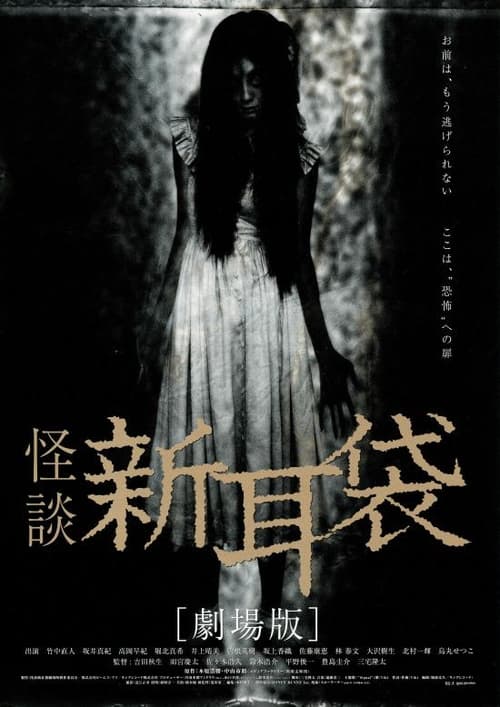
Tales of Terror from Tokyo and All Over Japan: The Movie
2004
No user ratings available yet
Representation score: 4.5 out of 10

Representation Score
Fair
2004
Director
Norio Tsuruta, Takashi Shimizu, Koji Shiraishi, Yoshihiro Nakamura, Masayuki Ochiai
Runtime
92 minutes
Average Rating
No ratings yetNew Showbiz Analysis
Dark Tales of Japan is a culturally immersive anthology that leans heavily into specific Japanese aesthetics and folklore. Its strength lies in its atmospheric dread and the technical proficiency of its directorial ensemble, which includes notable horror figures like Takashi Shimizu. However, the film functions as a traditional genre piece that lacks contemporary markers of diversity. The narrative structure prioritizes supernatural clichés and classical archetypes over the exploration of diverse social identities or systemic issues. Ultimately, the work is a specialized cultural experience. While it excels at establishing a specific sense of place and tradition, it offers little in the way of representation for LGBTQ+ identities or disability.
Category Breakdown
The film does not include explicit LGBTQ+ characters or explore non-straight relationships. Instead, it focuses on traditional Japanese horror clichés like folklore and vengeance, which prioritize classical archetypes over queer representation.
A central female character serves as the storyteller in a kimono, providing a baseline for female presence. However, her role seems functional rather than driving the plot forward.
The production features a primarily Japanese cast and setting, offering a focused exploration of Japanese cultural identity. It prioritizes a specific ethnic perspective through localized folklore rather than multi-ethnic casting.
The film uses traditional Japanese aesthetics, such as kimonos and mountain folklore, to create an eerie atmosphere. It explores the darker side of tradition rather than presenting a sanitized version of heritage.
There is no evidence of characters with visible or invisible disabilities within the provided narrative details. No representation in this category is present.
Present on Screen
Limited or Absent
Official Synopsis
Dark Tales of Japan is a collection of five short horror films that are directed by five notable Japanese film directors, which are told by a mysterious old lady in kimono on a late-night bus traveling on a long isolated mountain road.
2004

1965

2016

2007

1998
2012

2005

1998
No reviews yet. Be the first to share your thoughts on this movie!
Use the rating form above to leave a star rating and optional review.