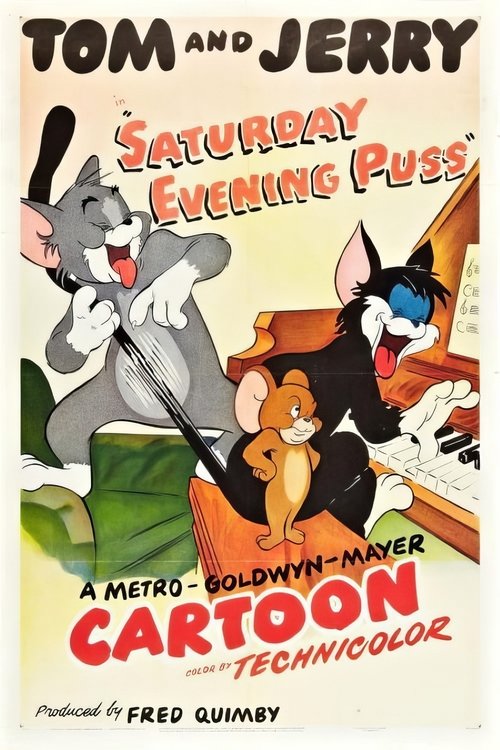
Saturday Evening Puss
1950
No user ratings available yet
Diversity score: 1.4 out of 10
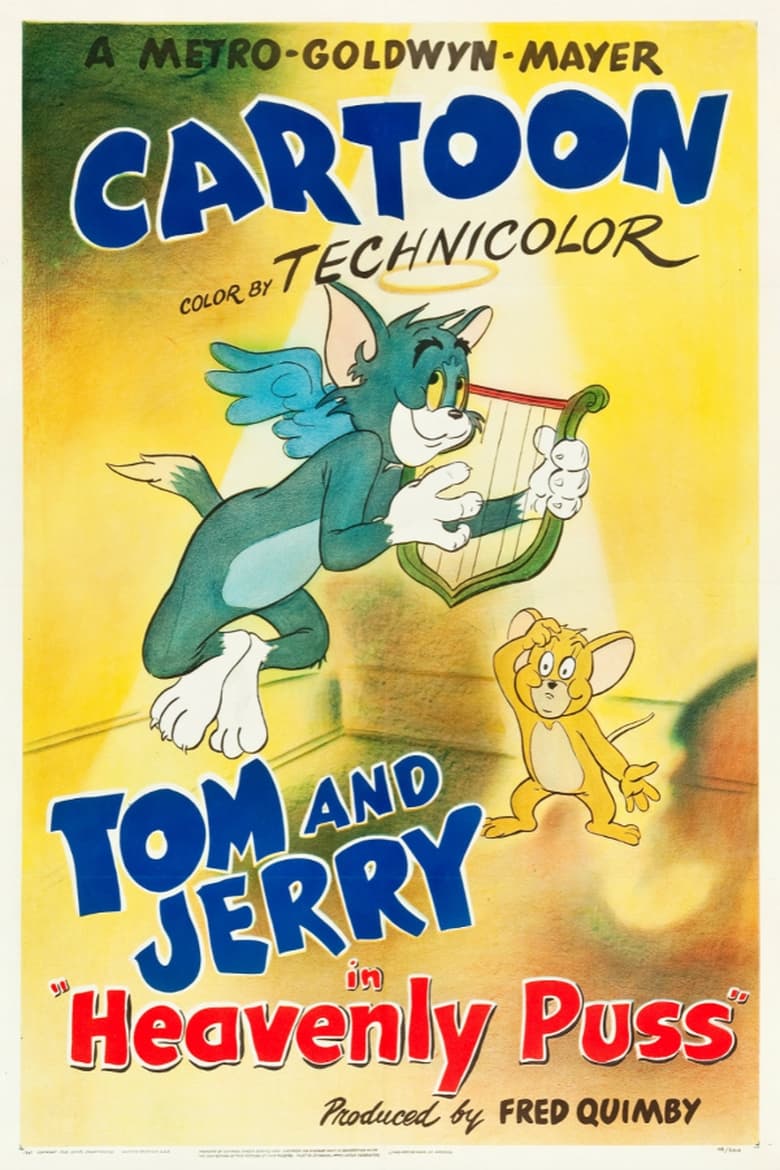
1949
NRDirector
William Hanna, Joseph Barbera
Runtime
8 minutes
Average Rating
No ratings yetSynopsis
During yet another pursuit of Jerry, Tom ends up being killed when an upright piano slides down the stairs and slams into him. He meets a feline St. Peter at the gate of the Heavenly Express, but is initially turned away due to his constant torture. However, he will be allowed onto the train if he can have Jerry sign a letter of forgiveness within one hour. If not, it's Hell for Tom. Will he go up or down?
Overall Score
Minimal
Category Breakdown
LGBTQ+ Representation
The story focuses on anthropomorphic animals in a domestic setting. There is no depiction of non-cisnormative identities or same-sex intimacy.
Gender Representation
Characters function as gender-neutral entities. This avoids traditional hierarchies but fails to engage with or subvert gender roles through narrative agency.
Racial & Ethnic Diversity
The cast consists of a homogeneous group of animals. The setting reflects a standard mid-century Western domestic environment without ethnic diversity.
Religious & Cultural Diversity
Religious iconography like a feline St. Peter serves as a comedic device. The plot follows a traditional moral arc regarding forgiveness and punishment.
Disability Representation
No visible or invisible disabilities are depicted. The slapstick violence is treated as a transient comedic element rather than a commentary on vulnerability.
Strengths
Areas for Improvement
AI Analysis
Heavenly Puss is a classic example of mid-century slapstick that prioritizes kinetic, physical comedy over social depth. The narrative operates within a closed loop of character conflict, focusing on the pursuit between Tom and Jerry. Because the film relies on universalized, non-verbal tropes, it avoids engagement with identity politics or systemic social hierarchies. The characters function as archetypes of pursuit and evasion rather than subjects of identity-based exploration. While the film utilizes a celestial framework to drive the plot, it uses these religious elements purely for comedic stakes. It does not attempt to challenge or critique traditional Western institutional norms.
1950
1949
1952
1940
1949
1952
1954
1956
1951
1954

1953
1950
No reviews yet. Be the first to share your thoughts on this movie!
Use the rating form above to leave a star rating and optional review.