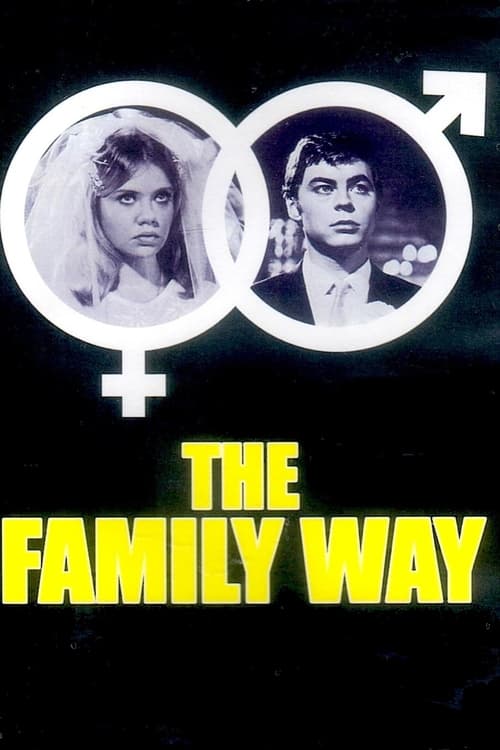
The Family Way
1966
No user ratings available yet
Representation score: 2.3 out of 10
Representation Score
Limited
1962
NRDirector
George Roy Hill
Runtime
112 minutes
Average Rating
No ratings yetNew Showbiz Analysis
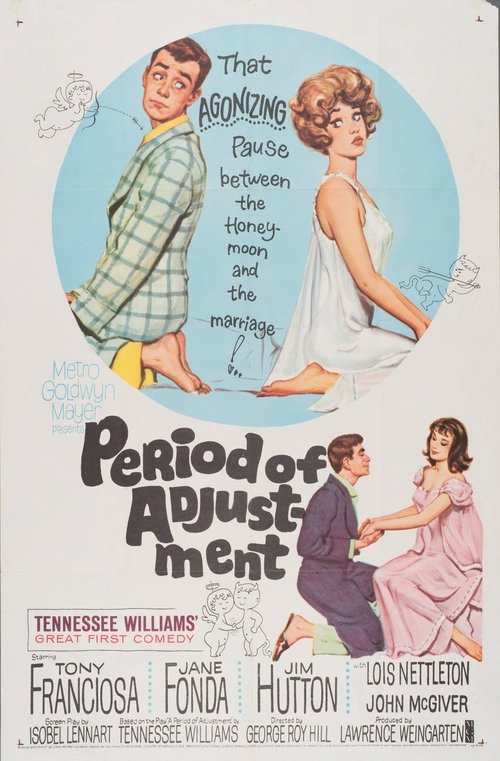
Period of Adjustment functions as a character study that challenges the stability of mid-century domesticity. By focusing on a woman's autonomy and a man's identity crisis, it disrupts the era's rigid gender roles. However, the film remains limited by the social norms of its 1962 setting, lacking broader representation of diverse identities. Ultimately, while it offers a nuanced look at the nuclear family and marital stability, it remains a narrow exploration of interpersonal relationships within a homogeneous social framework.
Category Breakdown
The film focuses solely on heterosexual marriages and does not depict any non-cisgender identities or same-sex relationships.
Eleanor challenges the subservient housewife stereotype by prioritizing her emotional autonomy and initiating divorce. The male protagonist also breaks from traditional masculinity by showing vulnerability.
The cast and social circles are predominantly white, reflecting the demographic homogeneity of early 1960s American cinema.
The story presents marriage dissolution as a complex transition rather than a moral failure, but it does not address broader societal issues.
There are no depictions of visible or invisible disabilities, neurodivergent traits, or chronic illnesses within the character arcs.
Present on Screen
Limited or Absent
Official Synopsis
A newlywed couple on their honeymoon visit friends who are having marital problems of their own.
1966

1970

1971

1967

1966

1972

1976

1969
No reviews yet. Be the first to share your thoughts on this movie!
Use the rating form above to leave a star rating and optional review.