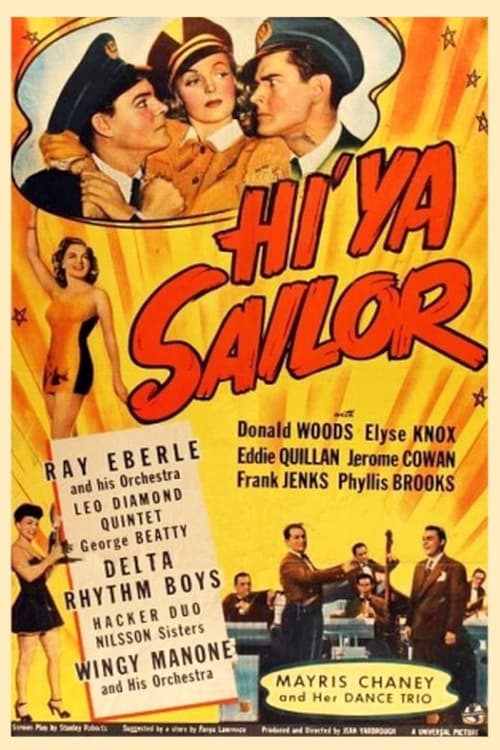
Hi'ya, Sailor
1943
No user ratings available yet
Representation score: 0.5 out of 10
Representation Score
Minimal
1941
ApprovedDirector
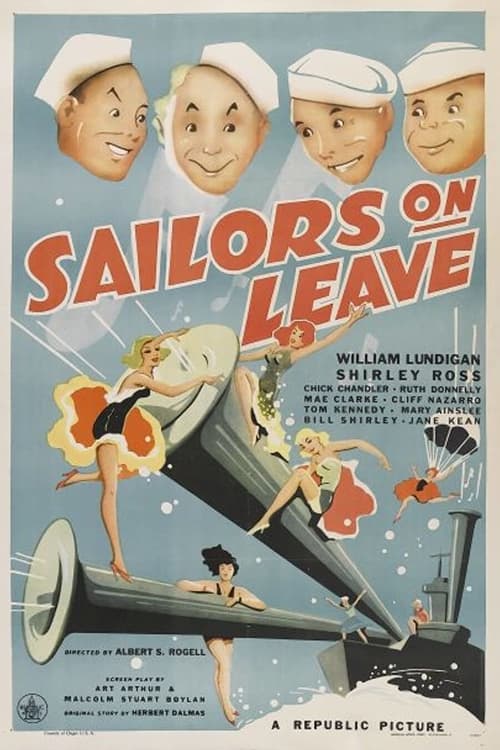
Albert S. Rogell
Runtime
71 minutes
Average Rating
No ratings yetNew Showbiz Analysis
Sailors on Leave is a conventional studio musical comedy that mirrors the demographic homogeneity of 1941 Hollywood. The narrative relies on traditional courtship clichés and escapist entertainment, offering no disruption to the era's established social norms. The film's structure prioritizes male protagonists, leaving female characters with limited influence. This adherence to period-specific hierarchies results in a lack of storytelling that reflects multiple aspects of identity or diverse representation. Ultimately, the production serves as a standard genre piece, reinforcing the status quo through a white-centric cast and straight-centered romantic dynamics.
Category Breakdown
The film follows the straight-centered standards of 1941 Hollywood, showing no evidence of non-straight relationships or non-cisgender identities.
Men play the central roles, while women mainly serve as romantic interests or plot catalysts. The film upholds traditional gender hierarchies typical of its time.
The cast is predominantly white, reflecting the casting norms of early 1940s Hollywood. There is no significant inclusion of characters of color with substantial influence.
This escapist comedy reinforces mid-century social stability and traditional values. It operates within established moral frameworks without challenging institutional power or systemic issues.
There is no notable focus on physical, sensory, or neurodivergent representation. Disability is not used as a central narrative device or character trait.
Present on Screen
Limited or Absent
Official Synopsis
If a shy sailor marries before his next birthday, he will inherit a fortune.
1943

1945
1943
1934
1946
1961

1935

1929
No reviews yet. Be the first to share your thoughts on this movie!
Use the rating form above to leave a star rating and optional review.