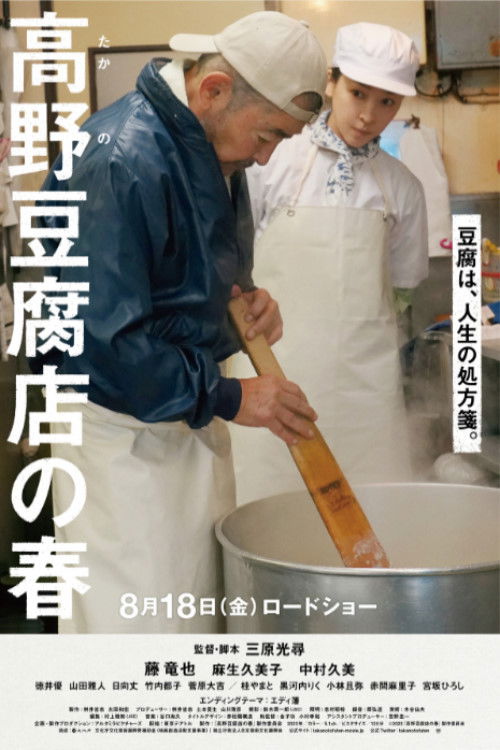
Takano Tofu
2023
No user ratings available yet
Representation score: 1.7 out of 10

Representation Score
Limited
1987
Director
Tokihisa Morikawa
Runtime
110 minutes
Average Rating
No ratings yetNew Showbiz Analysis
The Story of Jiro functions primarily as a traditional family drama. It prioritizes established social frameworks and the preservation of conventional familial structures over identity-driven subversion. The narrative lacks explicit representation of LGBTQ+ identities and does not showcase diverse ethnic intersections. It operates within a culturally homogeneous Japanese context that emphasizes social cohesion. While the film explores the classic theme of parent-child relationships, it offers little evidence of systemic disruption or the subversion of traditional gender hierarchies.
Category Breakdown
The film does not include visible representation of non-binary or transgender identities. There is no critique of the assumption that everyone is straight or cisgender.
The story centers on traditional parent-child relationships. It does not show women taking actions that challenge established hierarchies or male leadership.
As a Japanese production, the film operates within a culturally specific context. It appears to function as a culturally homogeneous narrative without diverse ethnic intersections.
The film focuses on traditional familial bonds and social cohesion. It emphasizes the preservation of standard social institutions rather than deconstructing them.
There is no mention of characters navigating physical, neurodivergent, or mental health conditions. No assessment of characters with disabilities having real influence can be made.
Present on Screen
Limited or Absent
Official Synopsis
Adaptation of the classic masterpiece about the relationship between parents and their children.
2023
1959
1996

1999
2021
2004
2019
2008
No reviews yet. Be the first to share your thoughts on this movie!
Use the rating form above to leave a star rating and optional review.