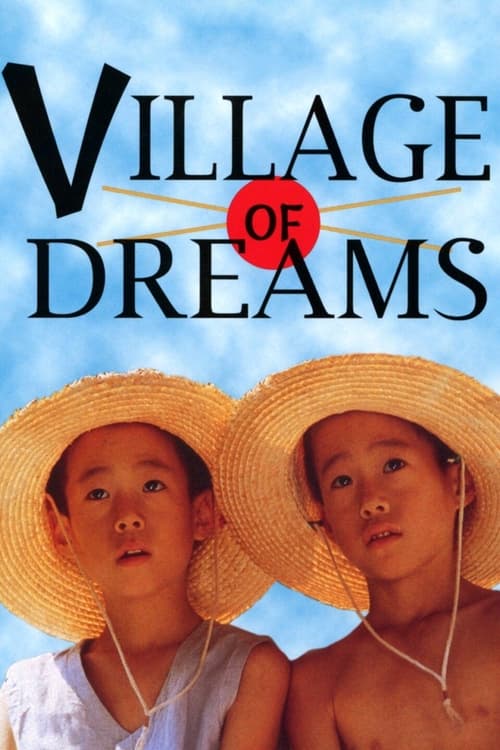
Village of Dreams
1996
No user ratings available yet
Diversity score: 5.4 out of 10

2008
Not RatedDirector
Yoji Yamada
Runtime
133 minutes
Average Rating
No ratings yetSynopsis
Set in Tokyo in 1940, the peaceful life of the Nogami Family suddenly changes when the father, Shigeru, is arrested and accused of being a Communist. His wife Kayo works frantically from morning to night to maintain the household and bring up her two daughters with the support of Shigeru's sister Hisako and Shigeru's ex-student Yamazaki, but her husband does not return. WWII breaks out and casts dark shadows on the entire country, but Kayo still tries to keep her cheerful determination, and sustain the family with her love. This is an emotional drama of a mother and an eternal message for peace.
Overall Score
Good
Category Breakdown
LGBTQ+ Representation
The film focuses strictly on nuclear and extended family units. There are no discernible non-cisnormative identities or same-sex romantic arcs present.
Gender Representation
Kayo subverts the helpless widow trope by assuming total agency and leadership. She manages the household and economic stability after the state removes the male figurehead.
Racial & Ethnic Diversity
Set in 1940s Tokyo, the film depicts a largely homogeneous Japanese society. It focuses on internal class and political dynamics rather than racial intersectionality.
Religious & Cultural Diversity
The narrative offers a sophisticated critique of state power and institutional oppression. It prioritizes humanism and peace over the nationalist fervor of the era.
Disability Representation
There are no prominent depictions of physical or neurodivergent disabilities that drive the narrative or serve as central character arcs.
Strengths
Areas for Improvement
AI Analysis
Kabei: Our Mother is a character study of resilience that succeeds by elevating a female protagonist to a position of central agency. By centering the story on Kayo's struggle to sustain her family, the film effectively disrupts traditional patriarchal hierarchies and subverts domestic tropes. The film's strength lies in its critical lens regarding state authority and its humanistic message. It frames the wartime political system as a predatory force that fractures domestic stability, offering a poignant critique of mid-20th-century institutionalism. However, the film remains limited by its historical setting, which results in a lack of racial plurality and LGBTQ+ representation. The narrative adheres to the traditional social structures of 1940s Japan, focusing on heteronormative familial bonds.
1996
1948
2019

1999

1972
1988
No reviews yet. Be the first to share your thoughts on this movie!
Use the rating form above to leave a star rating and optional review.