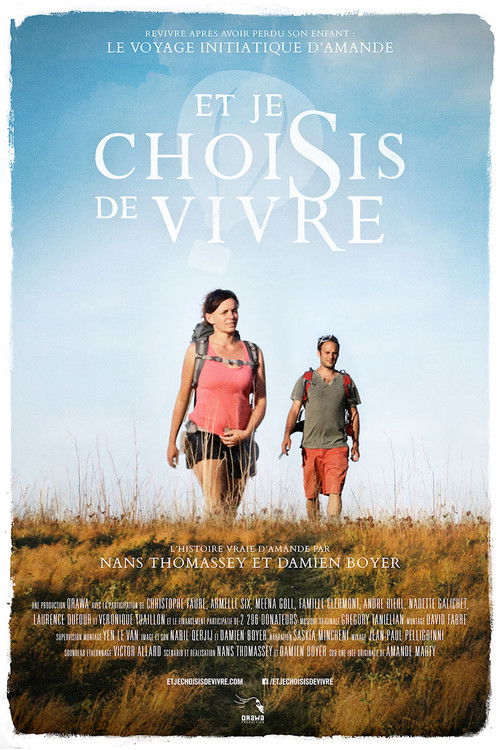
Et je choisis de vivre
2019
No user ratings available yet
Representation score: 6.1 out of 10
Representation Score
Good
2019
Director
Frank Beauvais
Runtime
75 minutes
Average Rating
No ratings yetNew Showbiz Analysis
Frank Beauvais’s documentary uses found footage to explore a personal psychological crisis. It avoids traditional reporting methods in favor of a subjective, essayistic examination of grief and existential stagnation. Though the film lacks broad demographic variety due to its localized Alsatian setting, it stands out in deconstructing social norms. It offers a progressive perspective on mental health and the breakdown of traditional masculine roles. Ultimately, the film's strength lies in its empathetic, non-judgmental approach to individual identity and the internal human experience.
Category Breakdown
The film explores the aftermath of a failed love story, emphasizing emotional vulnerability and the breakdown of non-traditional domestic structures. It focuses less on traditional milestones and more on emotional states.
The story challenges traditional masculine stability by showing a protagonist defined by loss and a lack of control over his life. It presents profound emotional distress rather than the expected stoic masculinity.
Set in a specific village in Alsace, the film focuses on a localized, homogeneous environment. There is no indication of a diverse cast or multi-ethnic dynamics within this setting.
The film emphasizes secular existentialism and personal morality over religious beliefs. It portrays personal stagnation as a valid state rather than a condition needing social or family intervention.
The film highlights invisible disabilities by focusing on mental health and psychological distress. It portrays the protagonist's neuro-emotional crisis with ability to act rather than as a barrier to overcome.
Present on Screen
Limited or Absent
Official Synopsis
January 2016. The love story that brought me to this village in Alsace where I live ended six months ago. At 45, I am now alone, without a car, a job or any real prospects, surrounded by luxuriant nature, the proximity of which is not enough to calm the deep distress into which I am plunged. I am lost and I watch four to five films a day. I decide to record this stagnation, not by picking up a camera but by editing shots from the stream of films I watch.
2019
2017
2020

2018
2010
2014
2007

2013
No reviews yet. Be the first to share your thoughts on this movie!
Use the rating form above to leave a star rating and optional review.