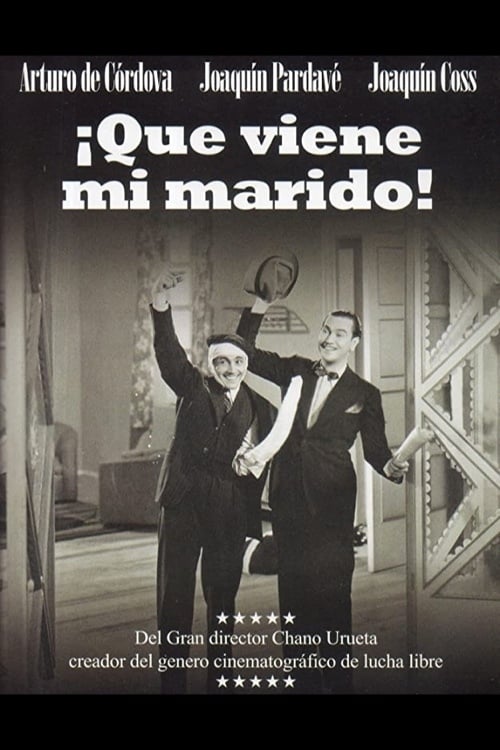
¡Que viene mi marido!
1940
No user ratings available yet
Diversity score: 2.8 out of 10

1953
Director
Joaquín Pardavé
Runtime
100 minutes
Average Rating
No ratings yetSynopsis
Adolfo, the son of Dona Mariquita, is committed to Marisa to please his mother, but his real love is Paz.
Overall Score
Limited
Category Breakdown
LGBTQ+ Representation
The film follows a conventional romantic trajectory centered on heterosexual courtship. There is no evidence of non-cisnormative gender identities or narratives that challenge heteronormativity.
Gender Representation
The plot reinforces traditional familial hierarchies through maternal influence and romantic obligation. While female characters are central, they operate within domestic spheres typical of the period.
Racial & Ethnic Diversity
The cast reflects the social homogeneity of the era, portraying a standardized middle-class urban Mexican identity. There is no evidence of intersectional blending.
Religious & Cultural Diversity
The narrative aligns with 1950s Mexican social values, focusing on domestic stability and familial duty. It reinforces maternal authority and conventional social cohesion.
Disability Representation
There is no discernible focus on characters with physical or neurodivergent disabilities within the narrative.
Strengths
Areas for Improvement
AI Analysis
Doña Mariquita de mi corazón serves as a quintessential example of mid-century Mexican commercial comedy. The film functions as a reflection of the established social and gender norms of the 1950s, prioritizing domesticity and traditional romantic archetypes over systemic subversion. The narrative architecture is built upon conventional structures, emphasizing maternal influence and the importance of familial duty. While the film features central female characters, they largely operate within the patriarchal and domestic frameworks of the era. Ultimately, the film lacks intersectional complexity. It maintains a standardized middle-class urban identity and adheres to the social hierarchies typical of the Golden Age of Mexican cinema.
1940
1961
1949
1949
1952
1978
1972
1948
1973
1990

1976

1940
No reviews yet. Be the first to share your thoughts on this movie!
Use the rating form above to leave a star rating and optional review.