
The Fair
1960
No user ratings available yet
Diversity score: 3.6 out of 10
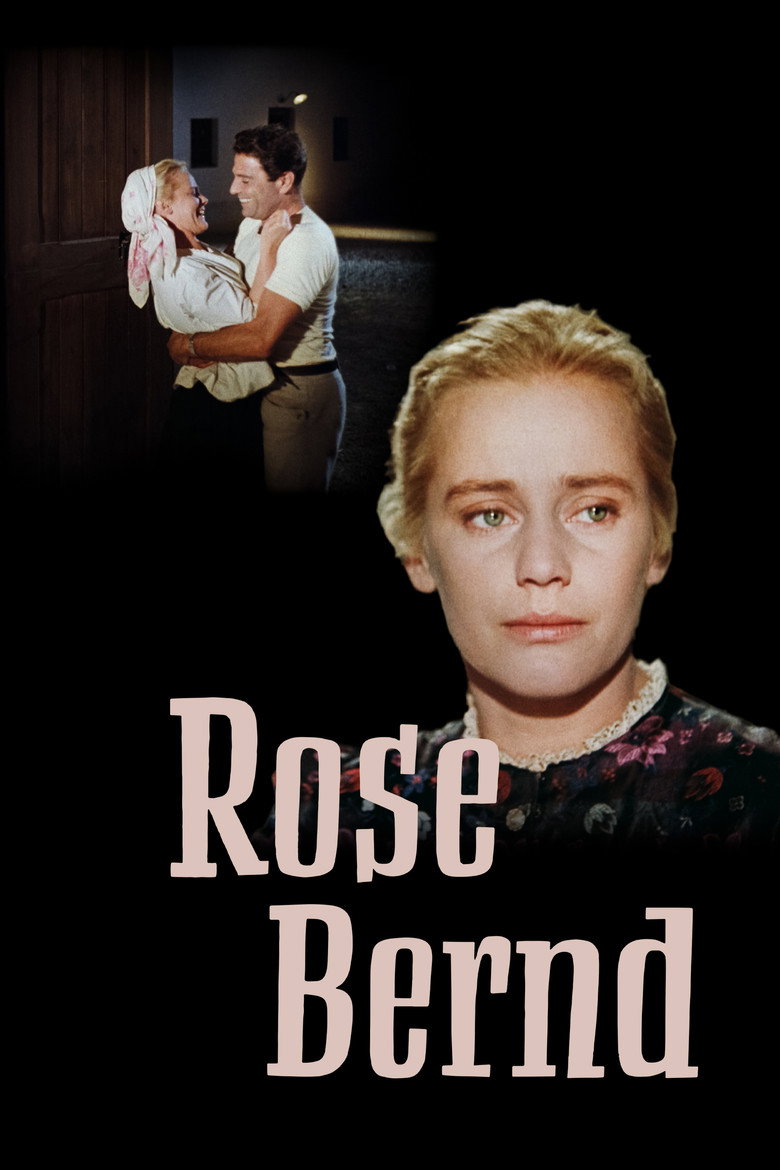
1957
Director
Wolfgang Staudte
Runtime
98 minutes
Average Rating
No ratings yetSynopsis
West Germany's entry in the 1957 Cannes Film Festival was this cinemadaptation of the Gerhardt Hauptman play Rose Bernd. The title character, played by Maria Schell, is a servant girl on a remote farm. Sexually assaulted by both her employer and a coworker, Rose later bears a child, who die soon afterward. After nearly two hours of unrelieved misery, Rose finally finds happiness in the arms of a longtime admirer (where has he been for the past 12 reels?) Rose Bernd (aka The Sins of Rose Bernd) received a smattering of American showings thanks to the drawing power of star Maria Schell.
Overall Score
Limited
Category Breakdown
LGBTQ+ Representation
The film contains no LGBTQ+ characters or narratives. The social framework is strictly defined by traditional heteronormative expectations.
Gender Representation
The narrative subverts gender hierarchies by highlighting the systemic vulnerability of women. It critiques how patriarchal authority stifles female agency and bodily autonomy.
Racial & Ethnic Diversity
The cast is ethnically homogeneous, reflecting the mid-century German setting. There is no diverse ethnic representation or color-blind casting.
Religious & Cultural Diversity
The film offers a sophisticated critique of religious morality and communal policing. It portrays these traditional institutions as oppressive and hypocritical.
Disability Representation
There is no representation of physical, sensory, or neurodivergent disabilities in the film.
Strengths
Areas for Improvement
AI Analysis
The Sins of Rose Bernd is a period drama that prioritizes thematic depth over demographic breadth. While it lacks intersectional casting, it uses its specific historical setting to launch a powerful critique of systemic oppression. The film excels in its deconstruction of patriarchal and religious authority. It frames the village's social cohesion not as a virtue, but as a mechanism of control used to marginalize individuals like Rose Bernd. However, the film's lack of racial, LGBTQ+, and disability representation reflects the limitations of its mid-century German context. The score reflects this tension between narrow casting and progressive narrative intent.
1960
1975

1989
1965
1974
1979
1958
1973
1948
1916
1974
1969
No reviews yet. Be the first to share your thoughts on this movie!
Use the rating form above to leave a star rating and optional review.