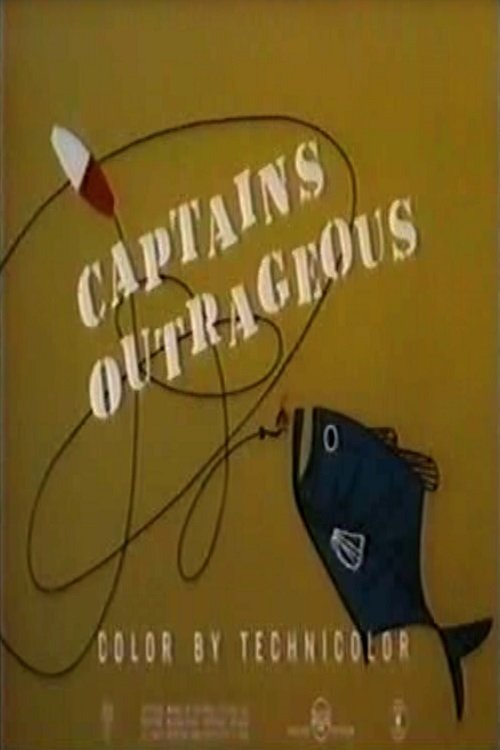
Captains Outrageous
1952
No user ratings available yet
Diversity score: 2.4 out of 10

1950
Director
John Hubley, Pete Burness
Runtime
7 minutes
Average Rating
No ratings yetSynopsis
An insurance salesman enters Magoo's house hoping to make a sale. Magoo refuses but the salesman is eventually able to sell Magoo some by posing as one of Magoo's old college chums. Magoo is now worth a hefty sum and is ready to collect after being bitten by a dog (actually a tiger rug) but, instead of going to the insurance building, enters a building under construction next door to it. The salesman and his boss notice Magoo walking around the steel skeleton of the building and realizing, "If he falls, the company falls", they rush over making several attempts to save Magoo's life and keep him from endangering himself.
Overall Score
Limited
Category Breakdown
LGBTQ+ Representation
The film lacks any evidence of LGBTQ+ characters or narratives. It adheres to the conventional social frameworks of the 1950s.
Gender Representation
The story centers on a male-dominated interaction between a salesman and Mr. Magoo. It relies on traditional masculine archetypes without any visible female agency.
Racial & Ethnic Diversity
The narrative focuses on a homogeneous social encounter within a mid-century Western setting. There is no indication of a diverse cast or non-Anglo-Saxon characters.
Religious & Cultural Diversity
The plot explores themes of deception and the preservation of capitalist institutions. It reinforces systemic stability rather than offering a critique of social structures.
Disability Representation
Mr. Magoo’s visual impairment serves as the primary driver for physical comedy. The portrayal functions as a catalyst for slapstick rather than offering nuanced representation.
Strengths
Areas for Improvement
AI Analysis
Trouble Indemnity is a product of its era, focusing on character-driven physical comedy within a standard mid-century Western framework. The narrative relies heavily on traditional archetypes and homogeneous social structures. The film lacks intersectional complexity, as the plot is driven by a transactional interaction between men. While the protagonist possesses agency, his visual impairment is primarily used as a comedic device for situational irony. Ultimately, the film reinforces the stability of corporate institutions. It reflects the narrow social and narrative constraints typical of 1950s animation, offering little in the way of diverse or subversive representation.
1952
1940
1926
1951
1954
1952

1953
1949
1948
1942
1958
1956
No reviews yet. Be the first to share your thoughts on this movie!
Use the rating form above to leave a star rating and optional review.