
River's Edge
2018
No user ratings available yet
Representation score: 7.5 out of 10
Representation Score
Limited
2015
Director
Yuki Otsuka
Runtime
120 minutes
Average Rating
No ratings yetNew Showbiz Analysis
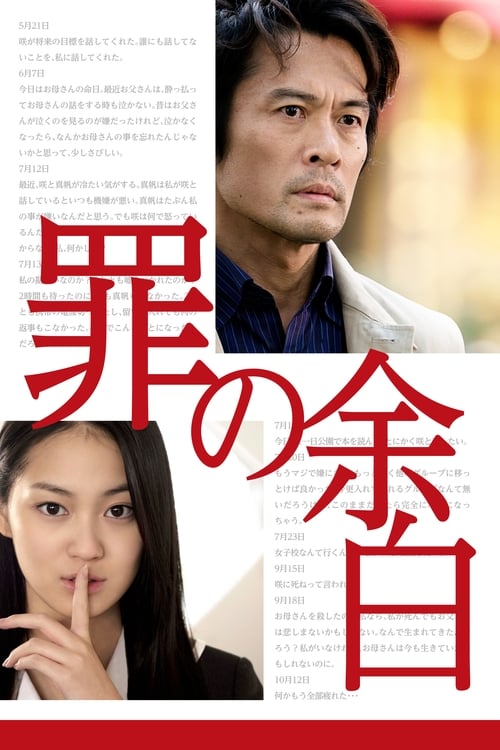
Crime's Blank is a psychological drama that emphasizes individual grief and social influence over broader systemic issues. The narrative centers on the tension between a grieving father and a charismatic student, focusing on personal loss rather than broader social frameworks. While the film offers a nuanced look at social influence and personal loss, it lacks the structural complexity to address broader multi-layered themes. Ultimately, it functions primarily as a character study with a narrow focus on individual experiences.
Category Breakdown
The film does not include any characters with LGBTQ+ identities or same-sex relationships. There are no queer character arcs or critiques of the assumption that everyone is straight.
Saki stands out as a strong female character who dominates her social environment through charisma and unconventional ambitions. However, the film does not provide enough information about her interactions with male characters to fully assess its impact on gender hierarchies.
As a Japanese production, the film focuses on individual character dynamics rather than exploring the intersection of different racial backgrounds. There is no evidence of casting actors from diverse backgrounds in roles traditionally expected to be filled by actors of a specific ethnicity.
The story examines the breakdown of the family unit after a tragedy but does not explicitly critique religious or cultural institutions. It does not use secularism as a primary narrative driver.
While suicide is a central plot point, the film does not depict any characters with disabilities, either physical or neurodivergent. There is no exploration of disability ability to act or representation.
Present on Screen
Limited or Absent
Official Synopsis
Ando can't accept this his daughter Kana committed suicide. Kana fell from the ledge of a school building and died. Ando attempts to find out the truth behind his daughter's death. He becomes suspicious of his daughter's former classmate, Saki. Saki isn't a typical high school student and she aspires to work in show business. She dominates her high school with her charisma.
2018

2008

2019
2005
2010

2003

2012

2006
No reviews yet. Be the first to share your thoughts on this movie!
Use the rating form above to leave a star rating and optional review.