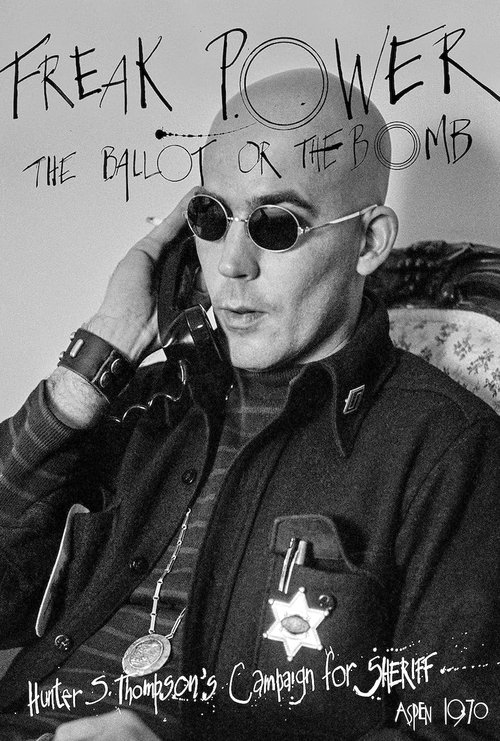
Freak Power: The Ballot or the Bomb
2020
No user ratings available yet
Representation score: 8.7 out of 10
Representation Score
Minimal
1968
Director
Richard Leacock, Noel E. Parmentel
Runtime
20 minutes
Average Rating
No ratings yetNew Showbiz Analysis
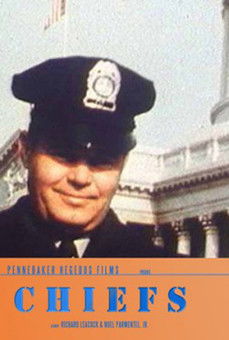
Chiefs is a work of observational critique rather than a study in demographic inclusion. It utilizes a deconstructive lens to challenge the stability of Western authority figures through raw, unmediated reality. The film's value lies in its subversion of institutional sanctity. By documenting the demonstration of anti-riot weapons and aggressive policing policies, it disrupts idealized portrayals of law enforcement. While the documentary scores low on traditional representation metrics, it succeeds in framing power structures as potentially oppressive and unsettling.
Category Breakdown
The film does not include any LGBTQ+ characters or narratives. It focuses solely on a 1968 professional law enforcement convention.
The story centers around a group that was predominantly male in 1968. It emphasizes traditional masculine hierarchies without showing women in roles of influence.
The subjects represent a homogeneous group of authority figures. Although reflecting the racial tensions of the late 1960s, the film lacks significant racial diversity among its cast.
The film excels at critiquing Western institutions. It uses an unsympathetic lens to highlight the tension between patriotic rituals and the reality of state-sanctioned force.
There is no evidence of subjects with visible or invisible disabilities being portrayed with influence or as part of the narrative focus.
Present on Screen
Limited or Absent
Official Synopsis
Filmed at the October 1968 meeting in Hawaii of several hundred police chiefs of the International Association of Chiefs of Police as they watch demonstrations of gruesome anti-riot weapons, sing patriotic songs, and defend their policies in front of the camera. Although filmed with the permission of the chiefs, the view is unsympathetic, sometimes funny, and more often frightening.
2020
2002
2017
1961
1968
2017
2017
2015
No reviews yet. Be the first to share your thoughts on this movie!
Use the rating form above to leave a star rating and optional review.