Geronimo
1939
No user ratings available yet
Representation score: 0.6 out of 10
Representation Score
Minimal
1949
NRDirector
John Rawlins
Runtime
78 minutes
Average Rating
No ratings yetNew Showbiz Analysis
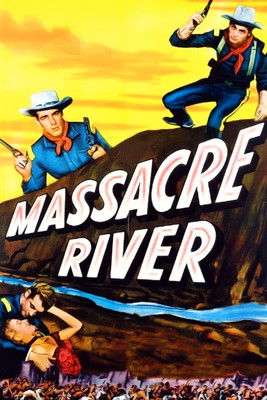
Massacre River is a classic Golden Age Western, adhering closely to the genre's traditional framework. The narrative relies on established clichés of frontier expansion and conventional heroism, offering little in the way of social critique. The film reinforces historical hierarchies by centering its conflict on male rivalry and colonial stability. Gender and ethnicity are used as tools for plot tension rather than for nuanced character development or systemic critique. Ultimately, the work reflects the socio-cultural constraints of 1949, prioritizing military order and patriarchal structures over diverse explorations.
Category Breakdown
The film does not include any LGBTQ+ identities. The plot revolves around a rivalry between two men over a woman, following traditional 1940s themes.
The female lead mainly serves as a catalyst for male conflict. She is portrayed as a passive object of desire in a patriarchal military environment.
The story centers on 'Indian troubles,' depicting Indigenous people as antagonistic obstacles. This reflects a binary conflict typical of the era's Western films.
The narrative emphasizes Western colonial structures and military order. It celebrates frontier expansion and the preservation of established Western institutions.
There are no characters with visible or invisible disabilities in the film.
Present on Screen
Limited or Absent
Official Synopsis
Two Cavalry Officers clash over the Colonel's Daughter at a remote outpost with Indian troubles.
1939
1963
1952
1964

1951
1950
1955

1949
No reviews yet. Be the first to share your thoughts on this movie!
Use the rating form above to leave a star rating and optional review.