The Devil's Eye
1960
No user ratings available yet
Representation score: 4.5 out of 10
Representation Score
Fair
1968
Director
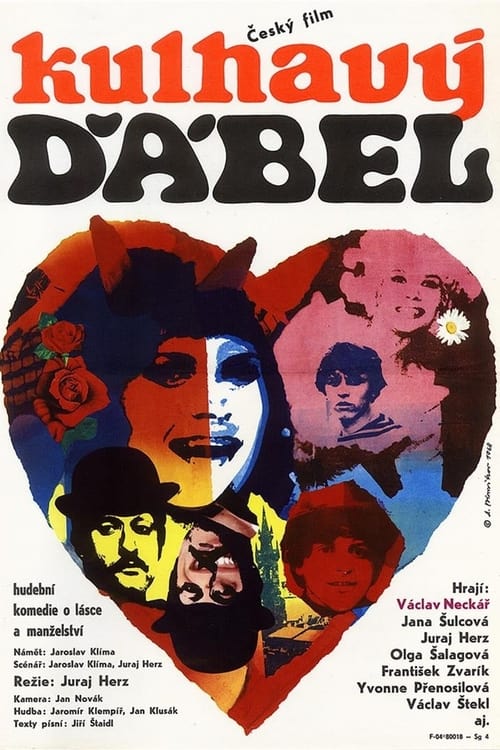
Juraj Herz
Runtime
82 minutes
Average Rating
No ratings yetNew Showbiz Analysis
The film prioritizes psychological and surrealist disruption over demographic diversity. While it lacks representation for LGBTQ+ and racial groups due to its historical and regional context, it offers significant depth through its cultural critique. Its strength lies in deconstructing traditional institutions and moral stability. By framing human connection through dysfunction and chaos, the film explores complex psychological states. However, the reliance on a homogeneous cast and traditional romantic structures limits its inclusivity score. The use of physical deformity as a surrealist tool remains a complex, potentially problematic element.
Category Breakdown
The film does not include explicit LGBTQ+ characters or non-straight relationships. Instead, it centers on traditional romantic pairings orchestrated by a supernatural force.
Zuzana takes control by rejecting suitors, while the plot explores themes of hysteria and voyeurism, suggesting a deconstruction of idealized gender roles.
The cast is ethnically uniform, reflecting the 1968 Czechoslovakian setting. There is no indication of diverse casting or racialized metaphors in this cultural context.
The film employs surrealism to critique social structures and moral certainties. It blurs the lines between the divine and demonic, favoring moral relativism over traditional communal cohesion.
Asmodeus is defined by a physical deformity, which serves as a narrative disruptor. The film uses the grotesque to create surrealist discomfort rather than relying on passive stereotypes.
Present on Screen
Limited or Absent
Official Synopsis
A baleful limping man walks through Prague. He is Asmodeus (Juraj Herz), the fiend of lustfulness, entertaining himself by putting together by magic couples of lovers. He only fails at the swimming pool. Zuzana (Jana Sulcová), the good-looking blonde, ignores the men whom the devil foists off onto her. She loves Honza (Václav Neckár) and the boy shares her feelings. The fiend is annoyed by the couple and tries to provoke a row. He sends heavy rain to force them into a hotel and then warns Zuzana's father by phone, but the young lovers manage to get out in time. Then the obstinate Asmodeus takes Honza in his sleep to the Institute for Emotional Disorders, where he shows him the ugly sides of love - hysteria, voyeurism, fetishism, suicide attempts...
1960
1988
1974
1982
1970
1958
1991
1950
No reviews yet. Be the first to share your thoughts on this movie!
Use the rating form above to leave a star rating and optional review.