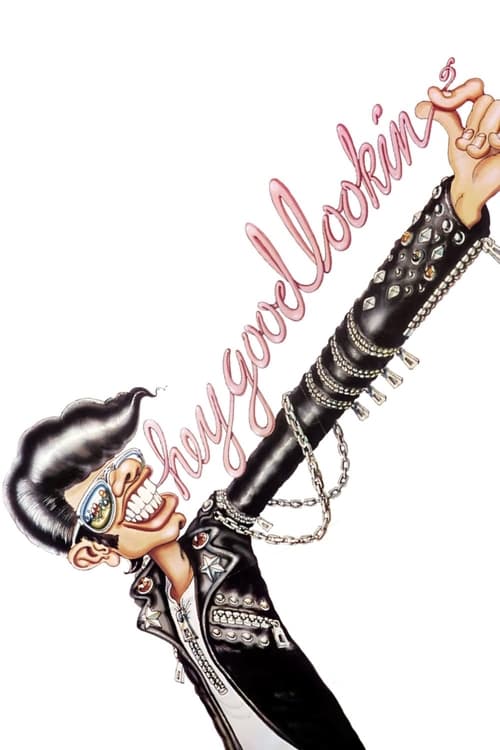
Hey Good Lookin'
1982
No user ratings available yet
Diversity score: 3.7 out of 10

1973
NC-17Director
Ralph Bakshi
Runtime
77 minutes
Average Rating
No ratings yetSynopsis
A white dropout struggles to become a cartoonist and filmmaker, drawing inspiration from the harsh, gritty world around him. Still sharing his rundown apartment with his middle-aged parents, an oafish slob of an Italian father and a ditzy nutcase of a Jewish mother, he's ridiculed and looked down upon by his friends, hypocrites who run with violent gangs and the Italian Mafia, and a shallow Black girl who makes her living downtown with the pimps and pushers. The cartoonist gets a chance to pitch a film idea to a movie mogul, but the story proves too outrageous: a far-future Earth, depleted by war and pollution, where a mutant antihero challenges and kills God.
Overall Score
Good
Category Breakdown
LGBTQ+ Representation
The film subverts heteronormative expectations by presenting a landscape of diverse sexual orientations. Sexuality is depicted as a fluid, chaotic element of the urban experience rather than through a lens of traditional morality.
Gender Representation
Gender hierarchies are disrupted by portraying traditional masculine authority as inept or dysfunctional. The film avoids romanticized ideals, instead focusing on the commodification of bodies and fragmented gender roles.
Racial & Ethnic Diversity
The story utilizes a multicultural New York City setting featuring Black, Italian, and Jewish characters. While animation styles occasionally lean into caricature, they reflect the raw reality of socioeconomic stratification.
Religious & Cultural Diversity
The narrative aggressively critiques Western institutions like the family, legal system, and capitalism. It favors moral relativism and uses a mutant antihero to metaphorically deconstruct religious and systemic authority.
Disability Representation
The film focuses on socioeconomic and psychological struggles rather than specific physical disabilities. Mutant elements appear to function as allegories for social alienation rather than nuanced portrayals of disability.
Strengths
Areas for Improvement
AI Analysis
Ralph Bakshi’s work excels at deconstructing established social structures and Western institutions. By centering the urban marginalized and the socially transgressive, the film offers a potent critique of mid-century stability and traditional morality. However, the reliance on underground comix-style caricature creates tension in racial representation. While the multicultural cast is present, the animation style risks leaning into stereotypes while attempting to depict socioeconomic reality. Ultimately, the film succeeds as a postmodern rebellion. It replaces sanitized storytelling with a gritty, morally relativistic worldview that challenges the status quo of religion, family, and capitalism.
1982
2003

1972
2015
1981
No reviews yet. Be the first to share your thoughts on this movie!
Use the rating form above to leave a star rating and optional review.