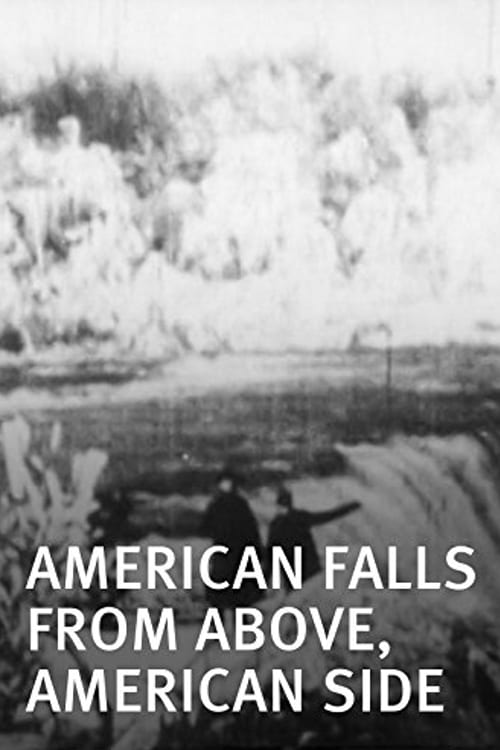
American Falls from Above, American Side
1896
No user ratings available yet
Representation score: 0.0 out of 10
Representation Score
Minimal
1896
Director
Alexandre Promio
Runtime
1 minutes
Average Rating
No ratings yetNew Showbiz Analysis
Niagara Falls is a foundational 'actuality' film focused on capturing real-world phenomena. The static camera setup and the genre of early travelogues limit the exploration of identity and social issues. The film primarily serves as a historical record of the landscape, rather than a platform for social representation.
Category Breakdown
The film focuses entirely on the natural landscape. There are no depictions of gender identity, sexual orientation, or interpersonal relationships.
The visual field is dominated by the falls. While tourists are visible on a nearby island, the distance prevents any meaningful analysis of gender dynamics or ability to act.
The footage captures a small group of late 19th-century tourists. There is no evidence of non-white or non-Anglo-Saxon majority casting within the frame.
This is a passive observation of nature and early tourism. It lacks engagement with religious, political, or socioeconomic critiques.
There is no evidence of characters with visible or invisible disabilities. The tourists appear to move through a standard recreational environment.
Present on Screen
Limited or Absent
Official Synopsis
A stationary camera looks west across Niagara Falls from the United States' side (the Niagara River rushes toward the falls from right to left). Virtually overlooking the falls and surrounded by the swift current not far from the camera is a small island where six or eight tourists watch the water, talk, and move about.
1896

1927
1900
1896

1896
1896
![Movie poster for Panorama des rives du Nil, [I]](https://image.tmdb.org/t/p/w500/4BwIzbRxNW1sPmSahjIAeuySsBo.jpg)
1897
1901
No reviews yet. Be the first to share your thoughts on this movie!
Use the rating form above to leave a star rating and optional review.