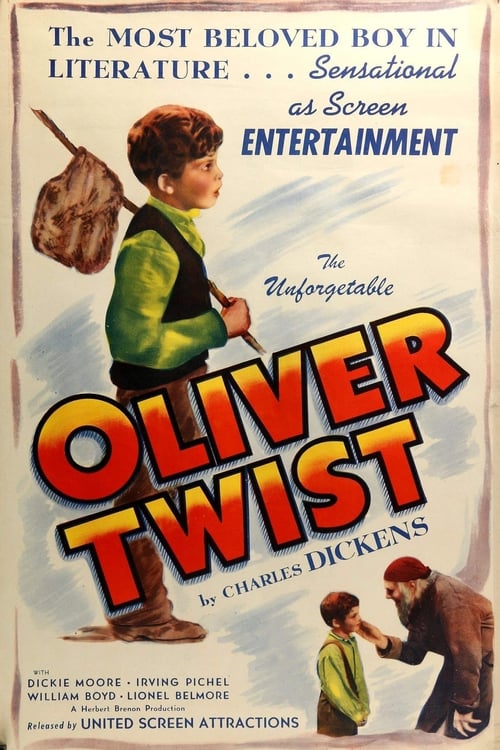
Oliver Twist
1933
No user ratings available yet
Representation score: 2.8 out of 10

Representation Score
Limited
1922
PassedDirector
Frank Lloyd
Runtime
74 minutes
Average Rating
No ratings yetNew Showbiz Analysis
Frank Lloyd’s 1922 adaptation of *Oliver Twist* functions as a period-accurate reconstruction of Victorian London. It succeeds in its critique of socioeconomic hierarchies, particularly highlighting how institutional structures like the workhouse fail the impoverished. This focus on class disparity provides the film's primary social depth. However, the film is socially conservative in its demographic composition. It lacks meaningful representation of race, disability, or LGBTQ+ identities, adhering instead to the monolithic casting and traditional social norms of the early 20th century. While it challenges class structures, it does not challenge the era's demographic status quo. Ultimately, the film prioritizes historical realism over diverse representation. It captures the systemic neglect of the era but fails to provide a diverse or subversive cast of characters.
Category Breakdown
The film does not feature any LGBTQ+ characters or non-straight relationships. The interpersonal dynamics are strictly aligned with traditional norms of the time.
Characters like Nancy have some moral complexity, but they often play roles of victims. The narrative reflects the gender hierarchies and social structures of the 1920s.
The cast is overwhelmingly homogeneous, reflecting the casting practices of 1922. It presents a culturally monolithic view of English social classes without any evidence of diverse ethnic backgrounds.
The film strongly critiques Victorian class systems and institutional failures like the workhouse. However, it remains tied to a traditional moral framework regarding innocence and crime.
There is no intentional representation of neurodivergence or physical disabilities. While poverty affects characters physically, those with disabilities are not central agents or given nuanced portrayals.
Present on Screen
Limited or Absent
Official Synopsis
An orphan endures a harsh life in a workhouse before fleeing to London, where he falls in with a gang of juvenile pickpockets led by the criminal Fagin, and eventually finds a better life, exposing the cruelties of poverty and child labor in Victorian England.
1933
1948
1982
1938

1925
1946
1926
1959
No reviews yet. Be the first to share your thoughts on this movie!
Use the rating form above to leave a star rating and optional review.