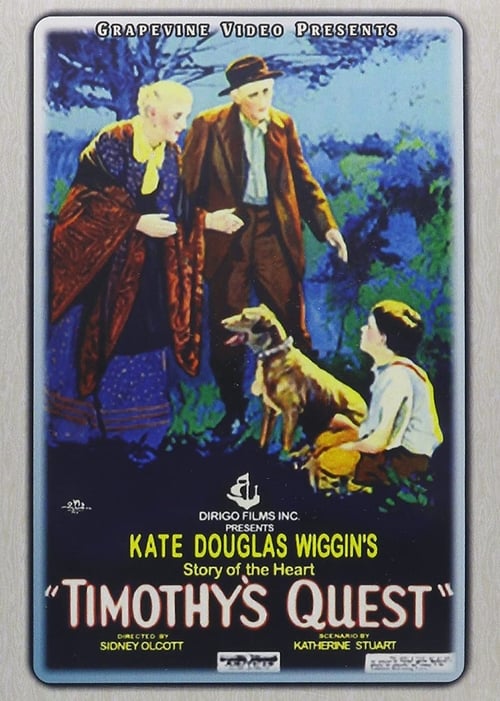
Timothy's Quest
1922
No user ratings available yet
Representation score: 2.0 out of 10

Representation Score
Minimal
1925
PassedDirector
George W. Hill
Runtime
80 minutes
Average Rating
No ratings yetNew Showbiz Analysis
Zander the Great is a traditional social melodrama centered around a female protagonist fighting against institutional cruelty. Mamie demonstrates significant protective strength but operates within the conventional dramatic structures of the silent era. The production lacks diversity, focusing on a homogeneous cast and reinforcing standard empathetic responses to vulnerability. It emphasizes individual morality without challenging broader systemic power dynamics or social hierarchies. Ultimately, the film offers a character-driven emotional journey but does not incorporate diverse identities or challenge typical social norms.
Category Breakdown
The film does not include any LGBTQ+ characters or non-cisgender identities. The main relationship is between an orphan and a young boy, which is platonic.
Mamie is a strong female character who takes charge to protect a child. However, the story relies on traditional maternal roles to create tension.
The cast appears to be homogeneous, reflecting the casting standards of 1925. There are no multi-ethnic or non-Anglo-Saxon characters.
The story critiques the mistreatment of orphans in institutions. However, it functions primarily as a melodrama rather than a deep social critique.
There are no characters with physical, sensory, or neurodivergent disabilities. The story does not address disability representation.
Present on Screen
Limited or Absent
Official Synopsis
Mamie, an orphan girl who was abused in the orphanage, is taken in by Mrs. Caldwell, a kindly woman with a young son named Alexander. Mamie hits it off with the lad, and nicknames him "Zander". When Mrs. Caldwell dies, the authorities decree that the boy must be placed in the same orphanage where Mamie was mistreated. Horrified, Mamie determines to see to it that the boy will be spared the same treatment that she had to suffer.
1922

1937

1957

1929
1926

1920
1926

1920
No reviews yet. Be the first to share your thoughts on this movie!
Use the rating form above to leave a star rating and optional review.