Dragan Wende - West Berlin
2014
No user ratings available yet
Representation score: 6.0 out of 10
Representation Score
Fair
1965
Director
Walter Heynowski
Runtime
32 minutes
Average Rating
No ratings yetNew Showbiz Analysis
O.K. (1965) serves as a historical document rooted in the socialist realism of East Germany. It prioritizes the collective experience of ethnic Germans and the systemic pressures of a divided nation over modern storytelling that reflects multiple aspects of identity. The film provides a nuanced look at individual ability to act through the eyes of Doris S., yet it remains constrained by the mid-century ideological frameworks of its era. It documents existing social hierarchies rather than attempting to challenge them. Ultimately, the work is a study of ethnic identity and displacement within a specific political landscape, lacking the intentionality of contemporary diverse narratives.
Category Breakdown
The documentary focuses on the personal history of Doris S. and ethnic German movements. There is no depiction of non-binary gender identities or same-sex relationships.
The film centers on the personal narrative of Doris S., providing women's ability to drive the story within a historical context. However, gendered experiences are often secondary to larger geopolitical shifts.
The film addresses the experiences of ethnic Germans, a homogeneous group. While it lacks multi-layered breadth, it provides a study of ethnic identity and displacement.
As a DEFA production, the film emphasizes systemic political divisions over religious morality. It favors a secular, state-oriented historical perspective shaped by socialist values.
There is no evidence regarding the portrayal of physical or neurodivergent disabilities in this work.
Present on Screen
Limited or Absent
Official Synopsis
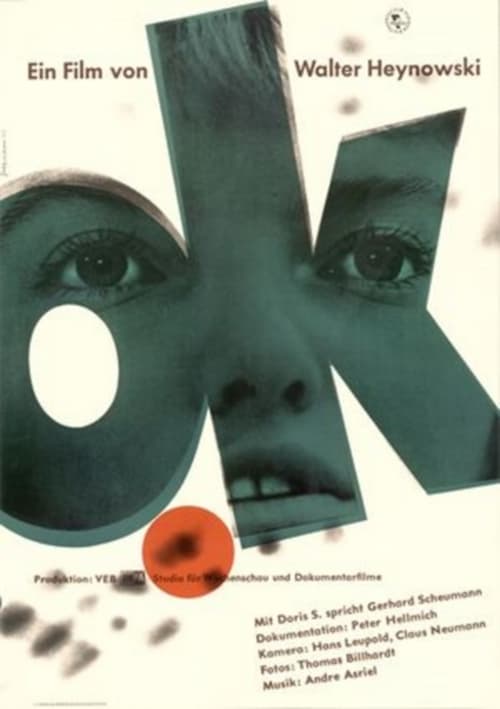
In a reception camp for ethnic Germans in Eisenach, the director gets to know the girl Doris S. who went to West Germany and came back. This film interview tells the story of her individual fate in a divided Germany.
2014

1938
1999
1967
2004

2000
2009
1991
No reviews yet. Be the first to share your thoughts on this movie!
Use the rating form above to leave a star rating and optional review.