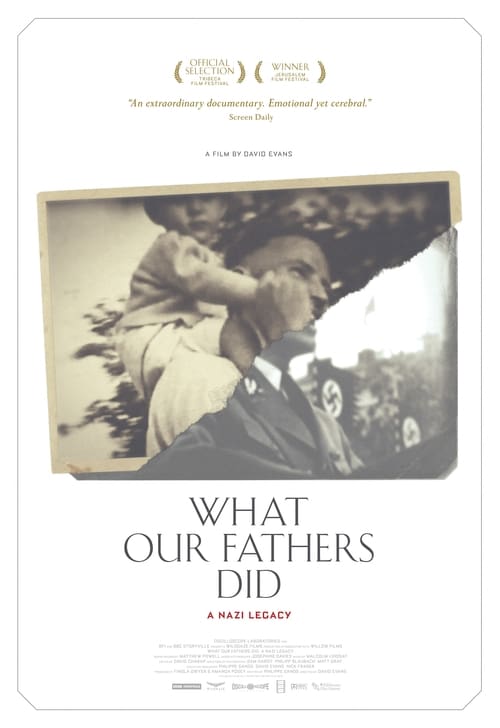
What Our Fathers Did: A Nazi Legacy
2015
No user ratings available yet
Diversity score: 4.5 out of 10
2009
Director
Birgit Schulz
Runtime
92 minutes
Average Rating
No ratings yetSynopsis
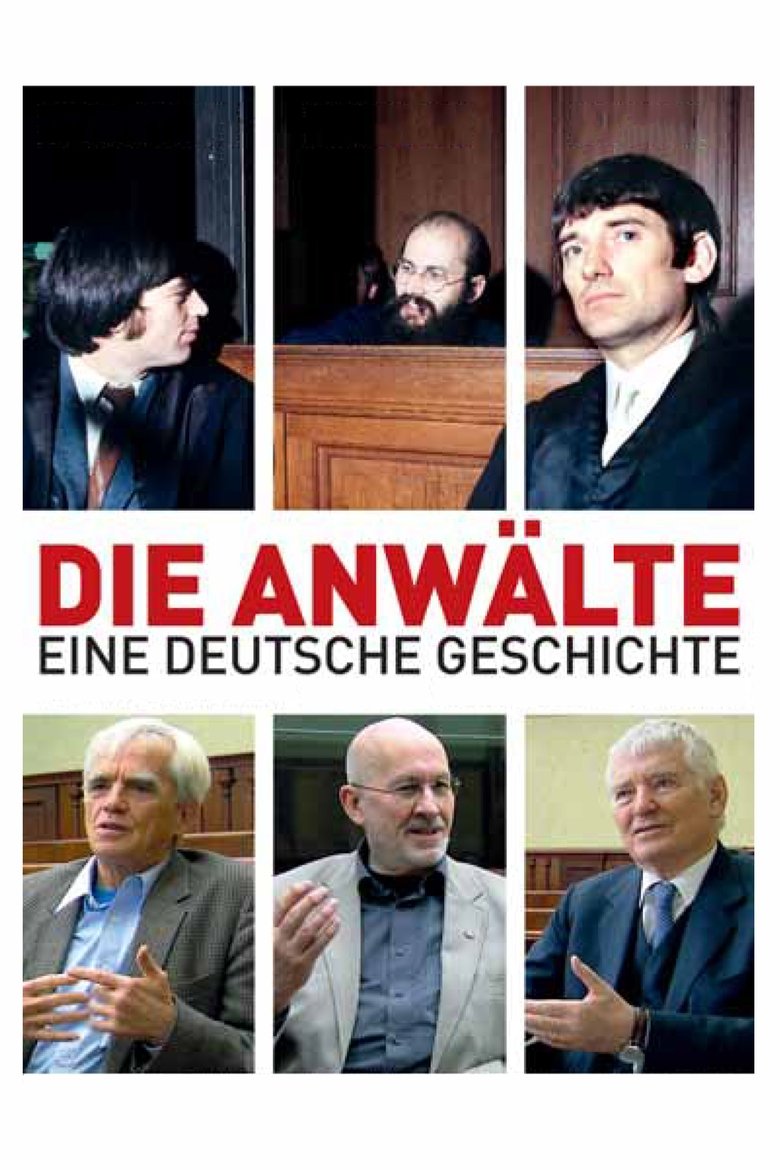
In the early 1970s, Otto Schily and Hans-Christian Ströbele were part of the group of attorneys of the left-wing extraparliamentary opposition in Germany. In this function, they, for instance, represented the militant Horst Mahler in court. One thing that united all three of them was their goal to create a new and different republic. They viewed Federal Germany as an oppressor of political freedom and as a vassal of the United States. Today, Schily is a former Federal Minister of the Interior with a firmly conservative stance and Ströbele is a well-respected member of the left wing of the Green Party in the German parliament while Mahler has again come into conflict with the law because of his extremist right-wing activities.
Overall Score
Fair
Category Breakdown
LGBTQ+ Representation
The film focuses strictly on legal history and political movements. There are no LGBTQ+ characters or narratives addressing non-cisnormative identities.
Gender Representation
The documentary centers on male figures like Schily, Ströbele, and Mahler. This focus on male-dominated political spheres results in a lack of gender-diverse agency.
Racial & Ethnic Diversity
This is a localized study of West German political figures. The subjects exist within a homogeneous ethnic landscape characteristic of that specific era and movement.
Religious & Cultural Diversity
The film engages with anti-hegemonic frameworks by exploring the extraparliamentary opposition. It critiques traditional Western political stability and the influence of United States interests.
Disability Representation
There is no documented evidence regarding the portrayal of physical or neurodivergent disabilities within the subjects or the narrative structure.
Strengths
Areas for Improvement
AI Analysis
The Lawyers provides a deep dive into the ideological evolution of three pivotal German political figures. It succeeds as a study of systemic friction and the tension between radical activism and state authority. However, the film is demographically narrow. The narrative is centered on a homogeneous group of men, which limits its breadth regarding gender, race, and LGBTQ+ intersectionality. Ultimately, the documentary trades demographic variety for high-level cultural critique. It prioritizes the deconstruction of state legitimacy and geopolitical influence over inclusive representation.
2015
1991
2018
2013
1973
2017

1965
2014
1993
2003
2017
2017
No reviews yet. Be the first to share your thoughts on this movie!
Use the rating form above to leave a star rating and optional review.