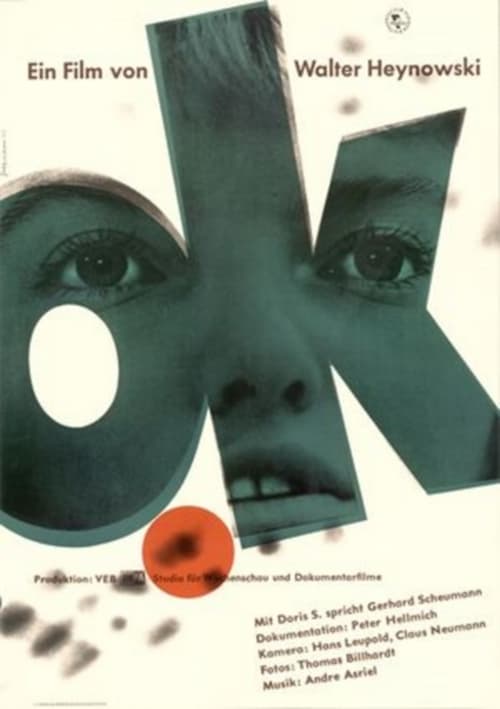
O.K.
1965
No user ratings available yet
Diversity score: 4.7 out of 10

1965
Director
Walter Heynowski
Runtime
34 minutes
Average Rating
No ratings yetSynopsis
The film deals with the infamous "Kommando 52", which was active in the 1960s civil war in the Congo and was recruited mainly from West German men. Among them is the former Wehrmacht officer Siegfried Müller. Based on personal accounts and original material - backed by tape recordings of interviewed mercenaries and photos of murdered Africans - it creates a hard hitting historical document.
Overall Score
Limited
Category Breakdown
LGBTQ+ Representation
The documentary focuses on military and mercenary operations within a mid-1960s geopolitical context. There are no LGBTQ+ characters or narratives exploring non-heteronormative identities present.
Gender Representation
The film centers on the recruitment of West German men, suggesting a narrative dominated by masculine archetypes of warfare. It documents a historically male-dominated sphere of conflict without subverting gender hierarchies.
Racial & Ethnic Diversity
While the film includes photos of murdered Africans, agency remains centered on the West German mercenaries. African subjects appear as victims or part of the landscape rather than central protagonists.
Religious & Cultural Diversity
The film functions as a hard-hitting historical document of mercenary brutality. It prioritizes historical veracity over the modern deconstruction of Western institutions or contemporary sociological frameworks.
Disability Representation
There is no evidence that disability, neurodivergence, or chronic illness are themes addressed within this documentary.
Strengths
Areas for Improvement
AI Analysis
Kommando 52 is a historical documentary focused on the activities of West German mercenaries during the Congo Crisis. The film relies on archival evidence, interviews, and photographic records to document paramilitary violence and the breakdown of order. The narrative structure is driven by the actions of the combatants, specifically the 'Kommando 52' unit. This focus results in a film that reflects the colonial and post-colonial power dynamics of the 1960s rather than modern intersectional perspectives. While the film provides essential visibility into the victims of the conflict through photographic evidence, the primary agency remains with the mercenaries. The work serves as a documentation of a specific military event rather than an exploration of diverse identities.
1965
2006
2000
1998
2015
2015
1946
1970
1966

2014
2004
1997
No reviews yet. Be the first to share your thoughts on this movie!
Use the rating form above to leave a star rating and optional review.