Cameo Kirby
1923
No user ratings available yet
Representation score: 0.6 out of 10
Representation Score
Minimal
1923
Director
Alexandre Volkoff
Runtime
383 minutes
Average Rating
No ratings yetNew Showbiz Analysis
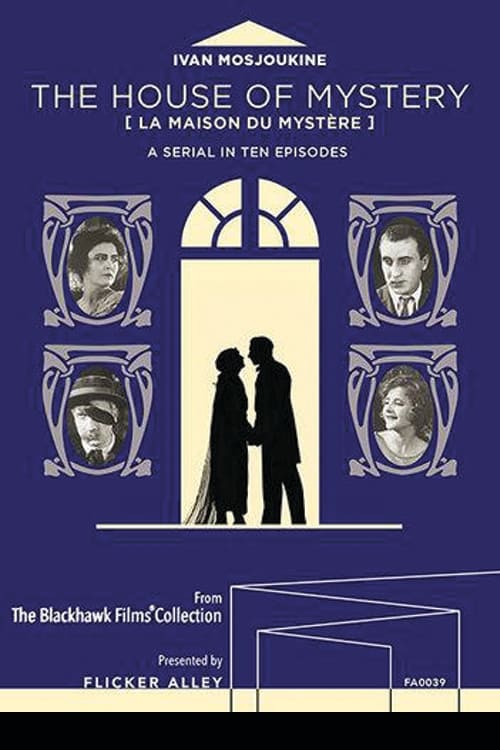
The House of Mystery is a period-accurate silent melodrama that aligns closely with the social hierarchies of 1920s France. The narrative depends on established clichés, such as the wronged hero and the damsel in distress, which confines the character dynamics to traditional roles. While the film delves into themes of injustice and long-term struggle, it does so through a lens of individual merit rather than systemic critique. The absence of diverse identities or non-traditional roles leads to a narrow social perspective. Ultimately, the film serves as a typical dramatic work of its era, reinforcing conventional gender and social norms without challenging them.
Category Breakdown
The film focuses on a traditional love triangle involving Julien, Régine, and Corradin. There are no queer subtexts or non-straight characters in the story.
Women such as Régine and Christiane play crucial roles in the film’s emotional stakes. However, they mostly occupy positions of vulnerability and are often the subjects of rescue rather than active agents in the plot.
The story unfolds in a localized French setting with a homogeneous cast. There is no indication of multi-ethnic representation or diverse racial backgrounds.
The melodrama highlights individual morality and personal redemption. It adheres to traditional notions of justice without questioning Western institutions or broader societal structures.
The synopsis does not mention any characters with visible or invisible disabilities. There is no representation in this area.
Present on Screen
Limited or Absent
Official Synopsis
Julien Villandrit is the owner of the estate of Les Basses-Bruyères and its textile factory, where the manager is his childhood friend Corradin. Julien marries his neighbour Régine, unaware that Corradin also loves her. Julien is sent to gaol for a murder actually committed by Corradin. The only witness to the truth is the woodsman Rudeberg and Corradin buys his silence by paying for the education of his son Pascal. Julien's struggle to clear his name and to rescue Régine and their daughter Christiane from Corradin's scheming extends over many years and faces many setbacks.
1923
1938
1949
1964
1923
1923
1926
1926
No reviews yet. Be the first to share your thoughts on this movie!
Use the rating form above to leave a star rating and optional review.