
The Sky Trembles and the Earth Is Afraid and the Two Eyes Are Not Brothers
2015
No user ratings available yet
Representation score: 2.4 out of 10
Representation Score
Good
2013
UnratedDirector
Alejandro Jodorowsky
Runtime
130 minutes
Average Rating
No ratings yetNew Showbiz Analysis
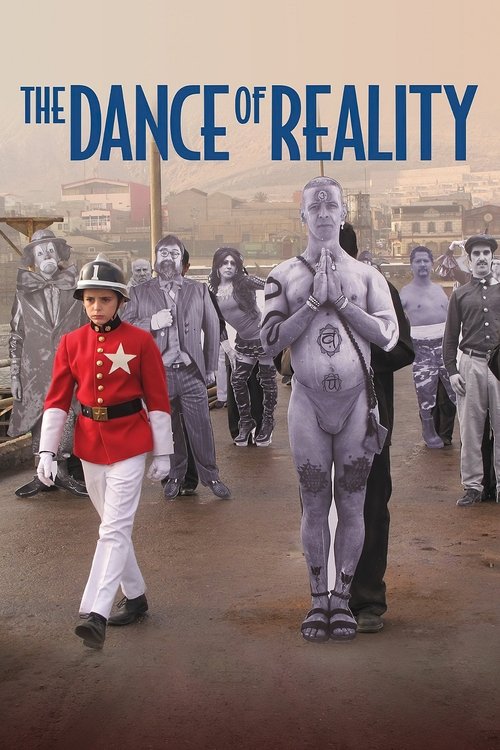
The Dance of Reality is a surrealist biographical project that emphasizes symbolic abstraction over sociopolitical representation. By focusing on the internal journey of an alienated psyche, the film bypasses traditional identity markers in favor of elemental archetypes. While the film lacks explicit representation of LGBTQ+ characters or non-assuming gender matches what was assigned at birth gender narratives, it successfully deconstructs rigid Western religious and moral hierarchies. It replaces traditional social roles with fluid, cosmic energies and postmodern critiques of institutional power. Ultimately, the work's diversity lies in its refusal to adhere to realism. It trades specific demographic inclusion for a subversive, non-linear exploration of the human condition and spiritual relativism.
Category Breakdown
The film focuses on metaphysical themes rather than specific LGBTQ+ identities. It doesn't include explicit queer characters or stories but avoids reinforcing traditional heterosexual norms.
Gender is portrayed through cosmic or elemental forces rather than typical social roles. This approach challenges traditional patriarchal structures by moving away from conventional hierarchies.
The film uses a surrealist, non-linear style that avoids specific ethnic categories. While it doesn't center a diverse cast, it avoids Western-centric realism through an inclusive abstract approach.
The narrative deconstructs Western institutions by using religious imagery to promote moral relativism. It prioritizes personal truth over established religious or social authority.
The film explores the human condition through a metaphysical lens rather than a social one. It touches on themes of alienation and experiencing reality differently without focusing on specific character actions.
Present on Screen
Limited or Absent
Official Synopsis
'Having broken away from my illusory self, I was desperately seeking a path and a meaning to life.' This phrase perfectly sums up Alejandro Jodorowsky’s biographical project: reconstituting the incredible adventure of his life. He was born in 1929 Tocopilla, a coastal town on edge of the Chilean desert, where he discovered the fundamentals of reality, as he underwent an unhappy and alienated childhood as part of an uprooted family.
2015
2016
2010

1972
1982
2017
1987
2018
No reviews yet. Be the first to share your thoughts on this movie!
Use the rating form above to leave a star rating and optional review.