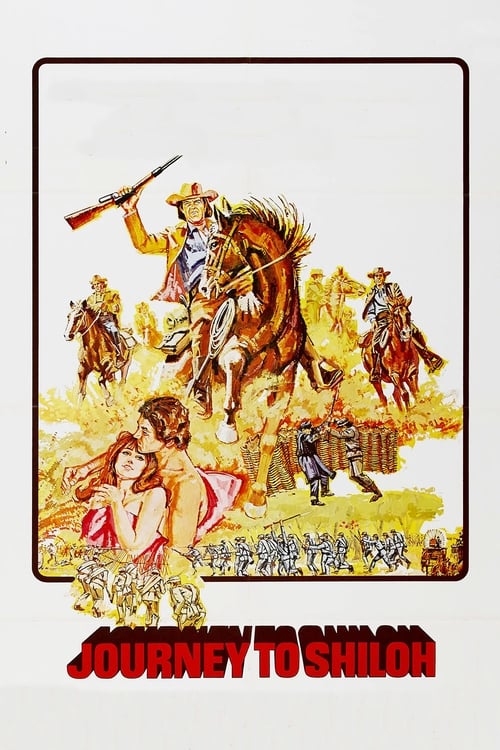
Journey to Shiloh
1968
No user ratings available yet
Diversity score: 1.6 out of 10

1948
NRDirector
George Marshall
Runtime
109 minutes
Average Rating
No ratings yetSynopsis
Set at the beginning of the Civil War, Tap Roots is all about a county in Mississippi which chooses to secede from the state rather than enter the conflict. The county is protected from the Confederacy by an abolitionist and a Native American gentleman. The abolitionist's daughter is courted by a powerful newspaper publisher when her fiance, a confederate officer, elopes with the girl's sister. The daughter at first resists the publisher's attentions, but turns to him for aid when her ex-fiance plans to capture the seceding county on behalf of the South.
Overall Score
Limited
Category Breakdown
LGBTQ+ Representation
The film lacks any discernible presence of non-heteronormative identities. Romantic arcs are strictly defined by traditional courtship and marriage dynamics.
Gender Representation
Women function primarily as domestic anchors or moral compasses. Their agency revolves around relationships to male figures rather than subverting patriarchal authority.
Racial & Ethnic Diversity
The inclusion of an abolitionist and a Native American gentleman provides a slight departure from a monolithic Southern perspective. However, Black characters remain largely relegated to roles of domestic service.
Religious & Cultural Diversity
The narrative prioritizes the preservation of the family unit and community stability. It lacks engagement with secularism or ideological critiques of the era's power structures.
Disability Representation
There is no significant evidence of characters with visible or invisible disabilities serving as central narrative drivers.
Strengths
Areas for Improvement
AI Analysis
Tap Roots is a mid-century historical drama that operates within the conventional narrative architectures of its era. While it attempts to introduce a nuanced political landscape by depicting a Mississippi county's neutrality, the story remains tethered to traditional social hierarchies. The film's approach to conflict focuses on familial loyalty and domestic stability rather than a systemic critique of the institutions driving the Civil War. It functions as a historical chronicle of a community in flux rather than a progressive re-examination of power. Ultimately, the production reflects the social and cinematic norms of the late 1940s, utilizing diverse characters primarily as supporting pillars for a central white familial drama.
1968

1956
1957
1964
No reviews yet. Be the first to share your thoughts on this movie!
Use the rating form above to leave a star rating and optional review.