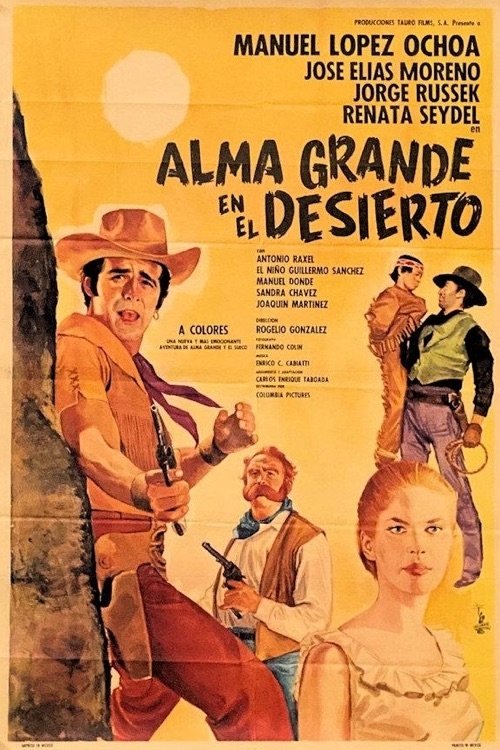
Alma grande
1966
No user ratings available yet
Representation score: 3.3 out of 10
Representation Score
Fair
1967
Director
Rogelio A. González
Runtime
90 minutes
Average Rating
No ratings yetNew Showbiz Analysis
Alma Grande en el desierto stands out for its subversion of the Western genre by elevating a Yaqui Indian protagonist to hero status. This choice provides a rare instance of Indigenous ability to act in mid-century cinema, challenging the era's typical Eurocentric perspectives. However, the film remains limited by the social norms of 1967. It lacks complexity in representing multiple aspects of identity, particularly regarding LGBTQ+ identities and non-traditional gender roles, which likely follow standard period archetypes. While the central character offers a strong cultural counter-narrative, the broader social and religious depictions are not clearly defined, resulting in a moderate cultural score.
Category Breakdown
The film does not include any documented LGBTQ+ characters or narratives. It seems to follow the conventional gender expressions and social norms of 1967.
The film likely follows traditional masculine leadership archetypes common in 1960s Westerns. There is no indication of female characters having high ability to act or subverting gender hierarchies.
By centering a Yaqui Indian hero, the film challenges the Anglo-centric dominance of the Western genre. This focus provides a meaningful counter-narrative to standard colonial clichés.
The film may challenge Western expansionist ideals through its Indigenous protagonist. However, the portrayal of religious or socioeconomic structures remains unclear.
There is no evidence regarding the inclusion or depiction of characters with physical or neurodivergent disabilities.
Present on Screen
Limited or Absent
Official Synopsis
Yaqui Indian hero -- comic-book adaptation.
1966
1956
1972
1957
1969
1961

1966
1965
No reviews yet. Be the first to share your thoughts on this movie!
Use the rating form above to leave a star rating and optional review.