Israel: Birth of a Nation
1995
No user ratings available yet
Representation score: 1.8 out of 10
Representation Score
Fair
2015
Not RatedDirector
Mor Loushy
Runtime
84 minutes
Average Rating
No ratings yetNew Showbiz Analysis
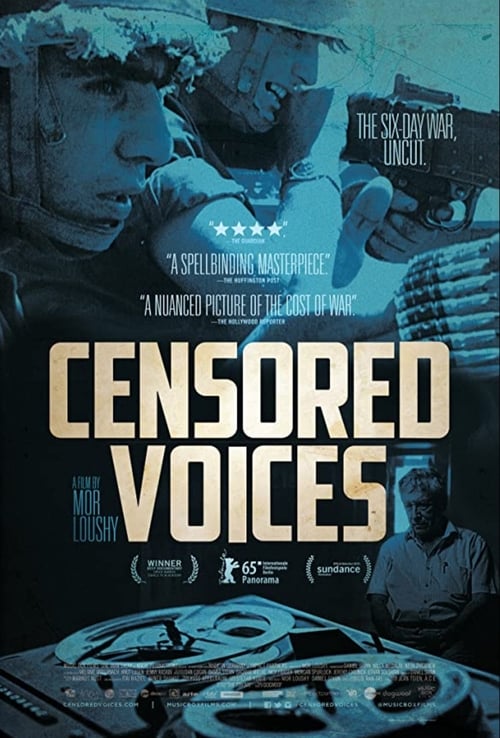
Censored Voices serves as a vital archival intervention, using suppressed primary sources to challenge official state narratives of the Six-Day War. It moves beyond the 'righteous victory' cliché to explore the moral ambiguity of territorial expansion. The film's strength lies in its cultural critique and its ability to disrupt monolithic national identities. By centering on the intimate, unvarnished conversations of soldiers, it provides a necessary counter-perspective to institutionalized history. However, the documentary's scope is narrow, focusing heavily on military and political shifts. This results in a lack of visible representation for LGBTQ+ identities and disability perspectives.
Category Breakdown
The documentary focuses on the sociopolitical aftermath of the 1967 war and soldier reflections. There is no explicit evidence of LGBTQ+ characters or themes within the narrative.
The film engages with mid-century Israeli military structures. While the subjects are historically male-dominated, the recordings introduce a vulnerable dimension to the traditional masculine archetype.
The narrative deconstructs a singular national identity by examining the transition to an occupying power. It highlights human complexities within the region's shifting geopolitical dynamics.
The film prioritizes the deconstruction of nationalistic fervor. By uncovering suppressed recordings, it validates authentic voices against oppressive, state-sanctioned historical constructs.
There is no discernible evidence regarding the portrayal of physical or neurodivergent disabilities in this work.
Present on Screen
Limited or Absent
Official Synopsis
The 1967 'Six-Day' war ended with Israel's decisive victory; conquering Jerusalem, Gaza, Sinai and the West Bank. It is a war portrayed, to this day, as a righteous undertaking - a radiant emblem of Jewish pride. One week after the war, a group of young kibbutzniks, led by renowned author Amos Oz, recorded intimate conversations with soldiers returning from the battlefield. The recording revealed an honest look at the moment Israel turned from David to Goliath. The Israeli army censored the recordings, allowing the kibbutzniks to publish only a fragment of the conversations. 'Censored Voices' reveals the original recordings for the first time.
1995
2011

2010
2012
2009
2014
2015
2024
No reviews yet. Be the first to share your thoughts on this movie!
Use the rating form above to leave a star rating and optional review.