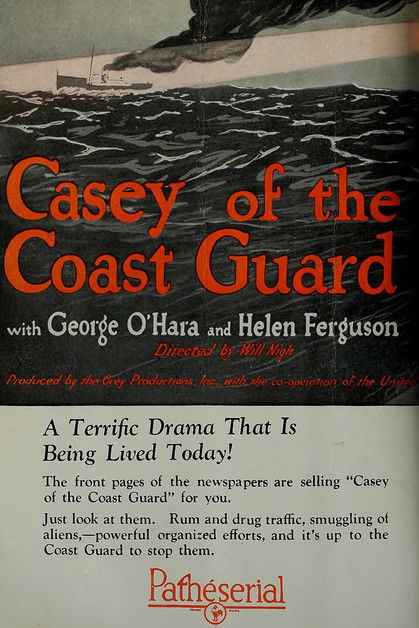
Casey of the Coast Guard
1926
No user ratings available yet
Representation score: 0.5 out of 10
Representation Score
Minimal
1928
PassedDirector
Roland D. Reed
Runtime
140 minutes
Average Rating
No ratings yetNew Showbiz Analysis
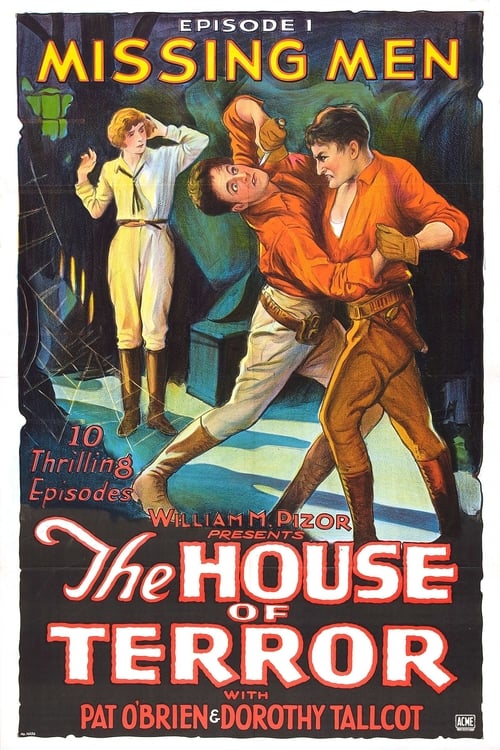
The 1928 serial presents a conventional mystery plot with an all-white cast. Men drive the action, while women occupy supporting roles. The story resolves by restoring domestic order, treating traditional family structures as the ideal. No characters with disabilities, non-white identities, or queer relationships appear. The film reflects standard 1920s norms without challenging them. Relationships follow strictly heterosexual conventions of the era. The on-screen inventory is limited to male and female actors of white ethnicity. Female characters serve as victims or helpers rather than leaders. Physical threats are external dangers, not bodily conditions.
Category Breakdown
No same-sex romance or queer identities appear in this 1928 serial. Relationships follow strictly heterosexual conventions of the era. The cast list and plot summaries contain no evidence of LGBTQ+ representation.
Women appear in supporting roles, such as Dorothy Tallcot, but men drive the action. Female characters serve as victims or helpers rather than leaders. Men resolve conflicts while women lack narrative power relative to their male counterparts.
The cast is entirely white, reflecting standard 1920s casting practices. No non-white characters appear in the surviving credits or plot summaries. The on-screen inventory consists solely of male and female actors of white ethnicity.
The narrative upholds conventional order by exposing a villain. Family and domestic safety are treated as the ultimate moral goal. The story resolves by restoring domestic order, treating traditional family structures as the ideal.
No characters with disabilities appear in the cast list or plot description. Physical threats are external dangers, not bodily conditions. There are no ongoing disability narratives or characters with physical or cognitive differences.
Present on Screen
Limited or Absent
Official Synopsis
A 10 chapter cliffhanger serial made by William M. Pizor Productions. 1. Missing Men 2. Tongues of Flame 3. Swirling Waters 4. Out of the Night 5. Perilous Trails 6. Secret Passage 7. Division 8. Revenge 9. Pawns of Evil 10. The Hidden Treasure.
1926

1933
1919
1927
1919
1926
1927
1936
No reviews yet. Be the first to share your thoughts on this movie!
Use the rating form above to leave a star rating and optional review.