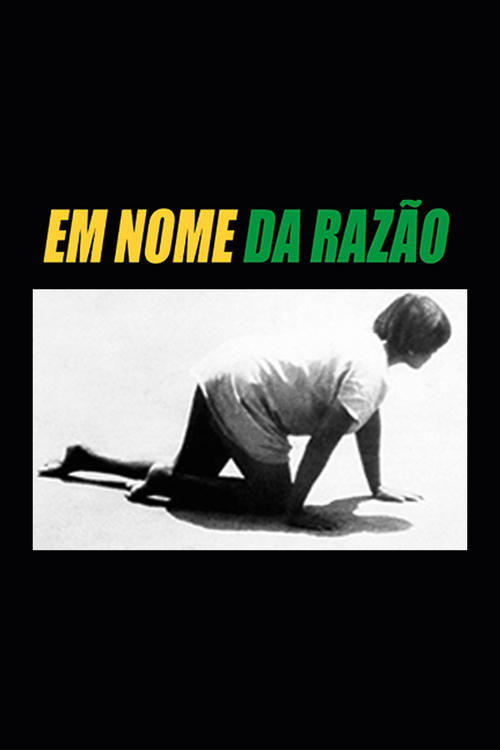
In the Name of Reason
1979
No user ratings available yet
Diversity score: 6.8 out of 10

1972
PGDirector
Michael Anderson, Saul Landau, Bill Yahraus
Runtime
4 minutes
Average Rating
No ratings yetSynopsis
A short film where jail house poet, Michael Beasley, reads his poetry illustrated by footage taken inside the San Francisco jail, in 1972. Music by Country Joe and His All-Star Band.
Overall Score
Good
Category Breakdown
LGBTQ+ Representation
The film does not explicitly codify the sexual orientations of its subjects. However, its placement within the 1972 San Francisco counter-culture suggests a narrative openness to non-normative identities.
Gender Representation
The documentary focuses on the male-dominated environment of the San Francisco jail system. It lacks significant female presence or a direct subversion of existing gender hierarchies.
Racial & Ethnic Diversity
The film offers visibility to a diverse inmate population often excluded from mainstream 1970s media. It uses documentary footage to highlight the intersection of race and systemic incarceration.
Religious & Cultural Diversity
The film excels by critiquing traditional Western institutions through an anti-establishment lens. The inclusion of Country Joe and His All-Star Band reinforces this counter-cultural ethos.
Disability Representation
The work engages with neurodivergence by framing mental volatility as a medium for agency. It avoids clinical or derogatory depictions by using poetry to navigate the institutional setting.
Strengths
Areas for Improvement
AI Analysis
Zombies in a House of Madness succeeds as a humanistic exploration of the carceral system, prioritizing the subjective voice of inmate Michael Beasley over institutional reporting. By centering a 'jail house poet,' the film grants agency to marginalized individuals and challenges the homogeneity of traditional social hierarchies. The documentary's strength lies in its cultural critique and its portrayal of mental health as a tool for expression rather than a deficit. It aligns itself with the progressive, anti-establishment movements of the early 1970s, using music and poetry to deconstruct institutional authority. However, the film is limited by its specific setting, which results in a lack of gender diversity and a focus on a predominantly male demographic. While it captures a diverse inmate population, it does not explicitly address specific sexual orientations or provide a broad spectrum of gendered perspectives.
1979
2000

2008
2011
1998
2011

1993
1984

2015

1975
1996
2002
No reviews yet. Be the first to share your thoughts on this movie!
Use the rating form above to leave a star rating and optional review.