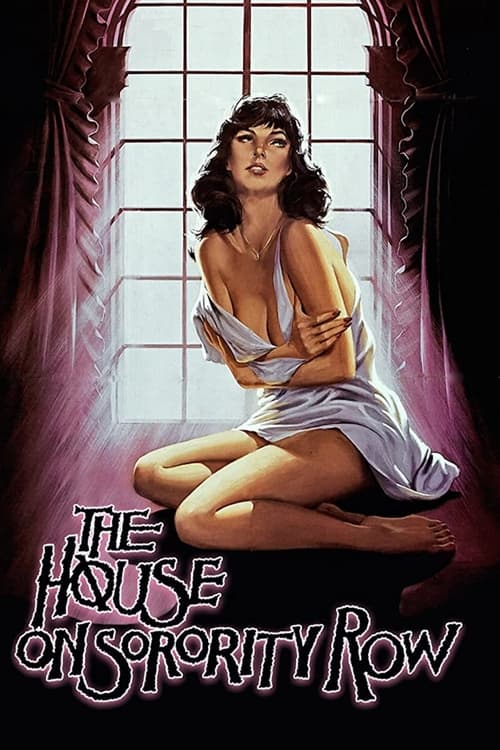
The House on Sorority Row
1982
No user ratings available yet
Representation score: 3.0 out of 10
Representation Score
Minimal
1986
RDirector
Fred Walton
Runtime
89 minutes
Average Rating
No ratings yetNew Showbiz Analysis
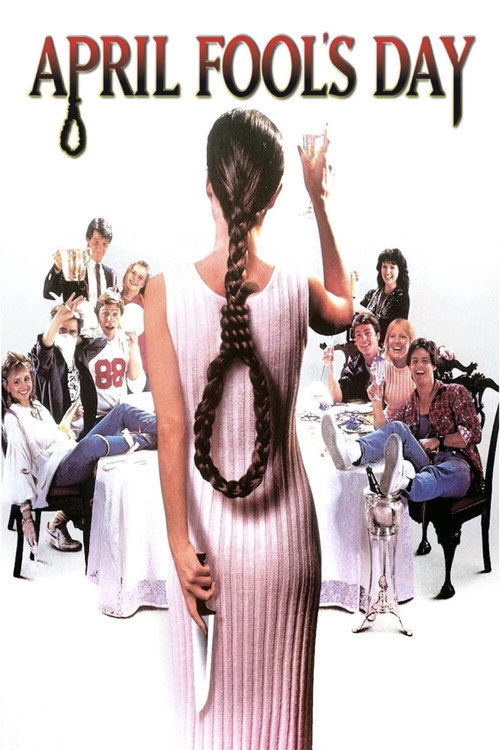
April Fool's Day primarily serves as a genre exercise focused on narrative trickery rather than social subversion. While the film deconstructs the concept of truth through its central prank, it does not challenge established identity-based hierarchies. The production relies heavily on 1980s social archetypes, resulting in a narrow demographic scope. The setting and cast reinforce an exclusionary, affluent, and white social environment that lacks meaningful diversity. Ultimately, the film's focus remains on the psychological distress of a privileged group rather than engaging with broader cultural or perspectives that reflect multiple aspects of identity.
Category Breakdown
The film does not include any LGBTQ+ characters or non-straight relationships. The social world is based on traditional, cisgender norms.
Female characters play key roles but are often subjected to violence. The film does not challenge traditional gender hierarchies or masculinity.
The cast is predominantly white and affluent, lacking engagement with racial or ethnic diversity.
The story explores postmodern themes by questioning objective truth through a simulated trauma. It focuses on the dynamics of a privileged social group.
The film does not represent physical, sensory, or neurodivergent identities. Characters are portrayed as fully able-bodied.
Present on Screen
Limited or Absent
Official Synopsis
On April Fool's Day weekend, a group of college friends gather together at a secluded island mansion to celebrate their final year of school, where they soon become prey for an unseen murderer.
1982
1971
2009
1959
2011

1974
1997
1980
No reviews yet. Be the first to share your thoughts on this movie!
Use the rating form above to leave a star rating and optional review.