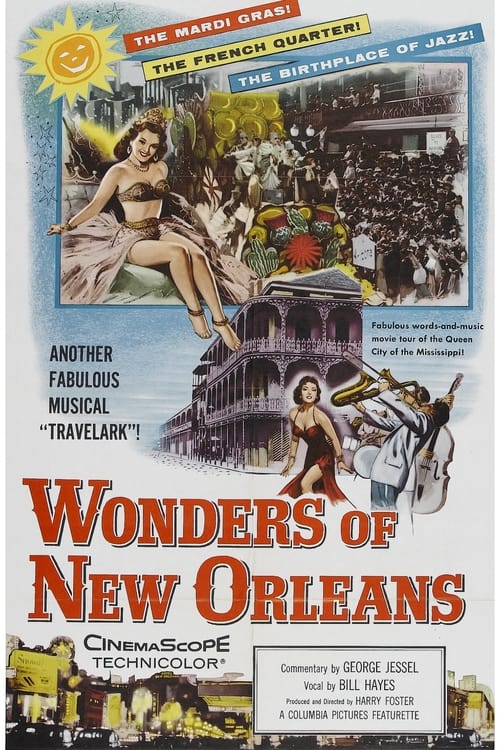
Wonders of New Orleans
1957
No user ratings available yet
Representation score: 2.1 out of 10
Representation Score
Minimal
1953
ApprovedDirector
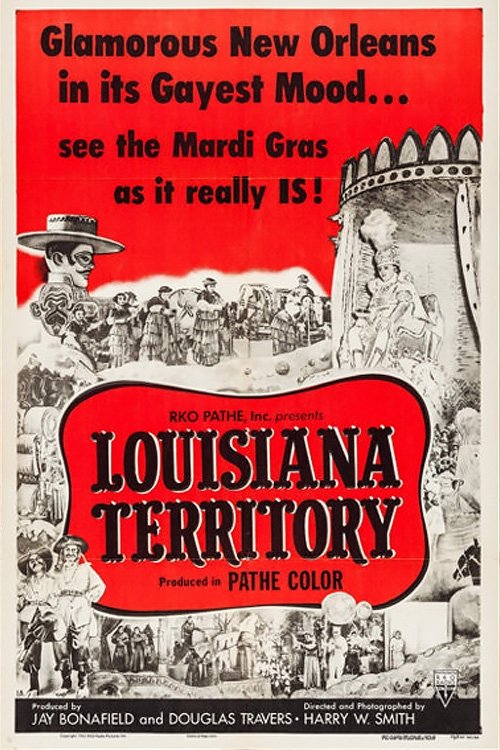
Harry W. Smith
Runtime
63 minutes
Average Rating
No ratings yetNew Showbiz Analysis
Louisiana Territory serves as a celebratory historical retrospective of American expansion. It uses a top-down perspective that emphasizes institutional growth and patriotic milestones over individual or underrepresented experiences. The film adheres to mid-century cinematic paradigms, focusing on the success of the Louisiana Purchase. This approach prioritizes the establishment of business districts, museums, and municipal development as the primary markers of progress. Ultimately, the work lacks nuanced character development. It functions more as a geographical and diplomatic survey than a detailed exploration of the diverse people living within the territory.
Category Breakdown
The film does not depict any non-straight relationships or identities. It focuses solely on the diplomatic history and the progression of the Louisiana Purchase territory.
The story centers around male-dominated roles such as high-level diplomacy and territorial expansion. This structure reinforces a traditional patriarchal framework of leadership and progress.
While New Orleans and Mardi Gras showcase diverse cultural expressions, the film prioritizes the U.S. diplomatic success. There are no actively leading characters of color driving the narrative.
The film celebrates Western expansion and American progress. It prioritizes the historical legitimacy of territorial acquisition and the establishment of American municipal institutions.
There are no visible or invisible disabilities depicted in the film. The footage focuses on landscapes, urban development, and historical figures.
Present on Screen
Limited or Absent
Official Synopsis
Made by RKO-Pathe, in Pathe color and three-dimension, in observance of the 150th anniversary of the Louisiana Purchase from France at a cost of $15,000,000 (more than the annual income of the U.S.A. at the time). After a short narrative showing U.S. Ambassador Robert Livingston (Val Winter) negotiating the purchase with Napoleon and Tallyrand, the rest of the film, guided by Livingston's spirit, visits the 1953 territory of the purchase and shows the growth of such former outposts as Minneapolis, Minnesota; Des Moines, Iowa; St. Louis, Missouri; Kansas City, Missouri and Kansas, and Little Rock, Arkansas. Most of the footage is given to New Orleans, Louisiana and its Vieux Carre, docks, business district and museums, ending with the preparation for that city's annual Mardi Gras.
1957

1939
1940
1926
1941

2014
1979

1946
No reviews yet. Be the first to share your thoughts on this movie!
Use the rating form above to leave a star rating and optional review.