Hubble: Thirty Years of Discovery
2020
No user ratings available yet
Representation score: 5.0 out of 10
Representation Score
Fair
2015
Director
Christopher Riley
Runtime
44 minutes
Average Rating
No ratings yetNew Showbiz Analysis
Hubble's Cosmic Journey is a traditional documentary that prioritizes scientific history and technical problem-solving. It succeeds in presenting a collective view of progress by including the contributions of women in STEM fields. However, the film remains focused on institutional history, specifically NASA, which often overshadows the diverse personal identities of the global scientific community involved. Ultimately, the documentary serves as a professional historical account, offering meaningful inclusion in STEM but lacking engagement with multi-layered identities or the subversion of social hierarchies.
Category Breakdown
The film focuses on technical and scientific milestones rather than personal identity. There are no explicit LGBTQ+ character arcs or social critiques present in the narrative.
The documentary highlights the roles of both men and women in building and operating the telescope. This disrupts the cliché of the solitary male genius by showcasing female scientists and engineers.
While the mission involved a global scientific community, the narrative focuses heavily on NASA and the technical rescue mission. This limits the visibility of specific racial or ethnic groups.
The film celebrates human achievement through the lens of Western scientific values. It frames scientific institutions as primary vehicles for human progress and the pursuit of knowledge.
The narrative centers on mechanical flaws and astronomical observation. There is no mention of individuals with visible or invisible disabilities.
Present on Screen
Limited or Absent
Official Synopsis
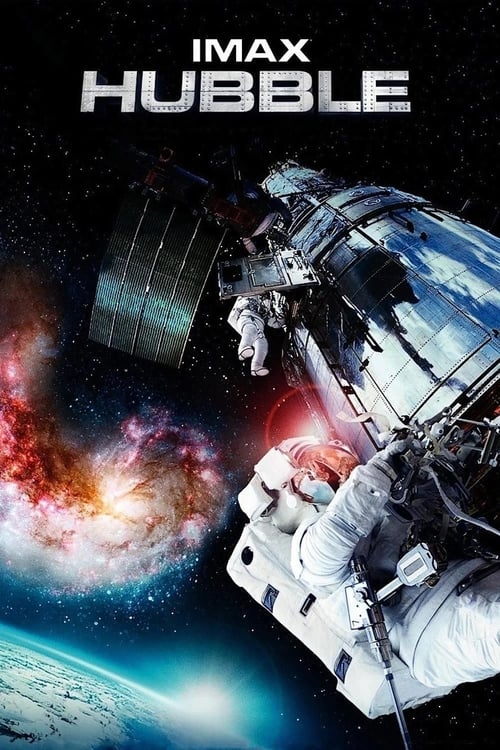
This is your window into the universe… Hubble was launched in April 1990 on board Space Shuttle Discovery. Its release into orbit over 500km above the Earth marked the birth of one of humanity’s biggest dreams; to place a telescope into space, high above the obscuring effects of the atmosphere, to gain the clearest view of the cosmos we could hope to see. But in the months which followed it was clear that the dream had turned into a nightmare, as Hubble’s mirror was found to have a flaw. Three years of heartache and huge human resolve followed, to mount a rescue mission to fix the flaw. The results were breath taking and produced the most complete view of the Universe we’ve ever had. This is the story of the men and women who conceived, built, fixed and operated Hubble – the most celebrated science instrument in history.
2020
2013
2012

2007
2010
2022
2021
2023
No reviews yet. Be the first to share your thoughts on this movie!
Use the rating form above to leave a star rating and optional review.