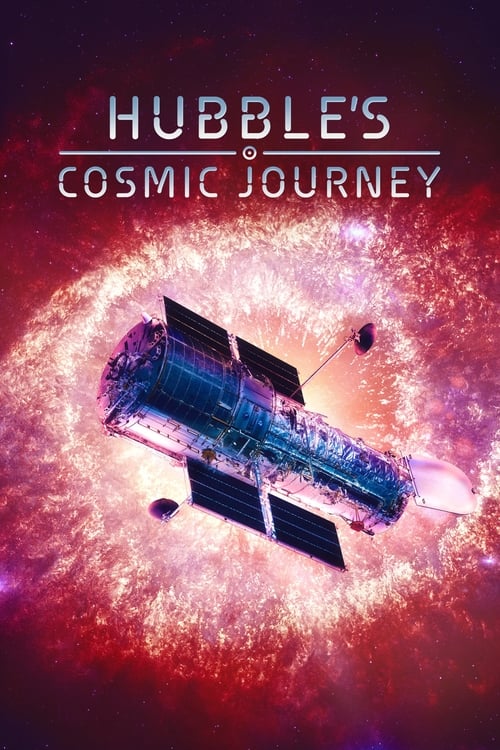
Hubble's Cosmic Journey
2015
No user ratings available yet
Diversity score: 4.7 out of 10

2012
Director
Christopher Riley
Runtime
59 minutes
Average Rating
No ratings yetSynopsis
This is the story of the most extraordinary journey in human exploration, the Voyager space mission. In 1977 two unmanned spacecraft were launched by NASA, heading for distant worlds. It would be the first time any man-made object would ever visit the farthest planets of the solar system - Jupiter, Saturn, Neptune and Uranus. On the way the Voyagers would be bombarded by space dust, fried by radiation and discover many of the remarkable wonders of the solar system. Now, at the end of 2012, 35 years and 11 billion miles later, they are leaving the area of the sun's influence. As they journey out into the galaxy beyond they carry a message from Earth, a golden record bolted to the side of each craft describing our civilisation in case of discovery by another. This is the definitive account of the most intrepid explorers in Earth's history.
Overall Score
Limited
Category Breakdown
LGBTQ+ Representation
The documentary focuses on unmanned probes and celestial bodies. There is no evidence of human characterization or interpersonal relationships to depict LGBTQ+ identities.
Gender Representation
The film operates within a neutral scientific framework. Because the focus remains on machines rather than the scientists involved, the portrayal remains at a baseline of neutrality.
Racial & Ethnic Diversity
The narrative centers on a global scientific achievement. While the Golden Record symbolizes universal human representation, there is no visible evidence of racialized character arcs.
Religious & Cultural Diversity
The film highlights a landmark of Western scientific achievement. It celebrates human civilization through a lens of scientific universalism rather than specific socio-political ideologies.
Disability Representation
The subject matter is strictly astronomical and mechanical. No human subjects or character arcs are presented that involve the depiction of neurodivergence or physical disabilities.
Strengths
Areas for Improvement
AI Analysis
Voyager: To the Final Frontier is a technical documentary centered on the mechanical and astronomical achievements of NASA’s Voyager mission. Because the narrative follows unmanned spacecraft and celestial phenomena, it lacks the human-driven social dynamics required for traditional identity-based analysis. The film functions as a celebratory account of scientific progress. While it touches on the concept of universal human representation via the Golden Record, it does so through a lens of technological universalism rather than interpersonal or social diversity. Ultimately, the lack of representation is a byproduct of the genre. The focus on machines and space dust precludes the inclusion of character-driven arcs or social hierarchies.
2015

2016

2022
2015
2016
1976
2007
2022
2010

2018

2019

2016
No reviews yet. Be the first to share your thoughts on this movie!
Use the rating form above to leave a star rating and optional review.