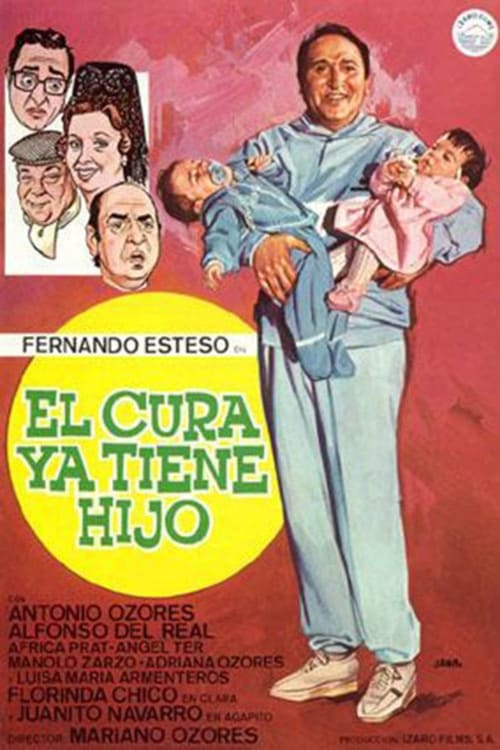
El cura ya tiene hijo
1984
No user ratings available yet
Representation score: 1.8 out of 10

Representation Score
Limited
1974
Director
Vicente Escrivá
Runtime
96 minutes
Average Rating
No ratings yetNew Showbiz Analysis
Polvo eres... operates within a conventional mid-1970s Spanish cinematic framework. The narrative prioritizes traditional social and religious structures, offering little room for diverse identities or systemic critique. The film's focus on a male protagonist and religious figures reinforces the era's standard social norms. It lacks the diversity needed to challenge established hierarchies or provide representation for underrepresented groups. Ultimately, the work functions as a localized production that reflects the demographic and cultural homogeneity of its time and place.
Category Breakdown
The film does not include any characters with non-straight or non-cisgender identities. The story focuses on a protagonist and a priest, emphasizing traditional social roles.
The story centers around a male protagonist dealing with a health issue. There is no indication of strong female roles or challenges to traditional gender norms.
The production reflects the demographic homogeneity of its setting. There is no evidence of a multi-ethnic cast or diverse racial representation.
Religious institutions play a central role through the presence of a priest. The themes emphasize conventional morality and traditional social stability.
A serious illness serves as a central plot point following a dizzy spell. However, it is unclear if the character retains control over their situation or if the illness is merely a plot device.
Present on Screen
Limited or Absent
Official Synopsis
The poor Camilo was about a priest, when he suffered a dizzy spell and was diagnosed with a serious illness.
1984

1980
1971
1982
1974
1979

1971
1970
No reviews yet. Be the first to share your thoughts on this movie!
Use the rating form above to leave a star rating and optional review.