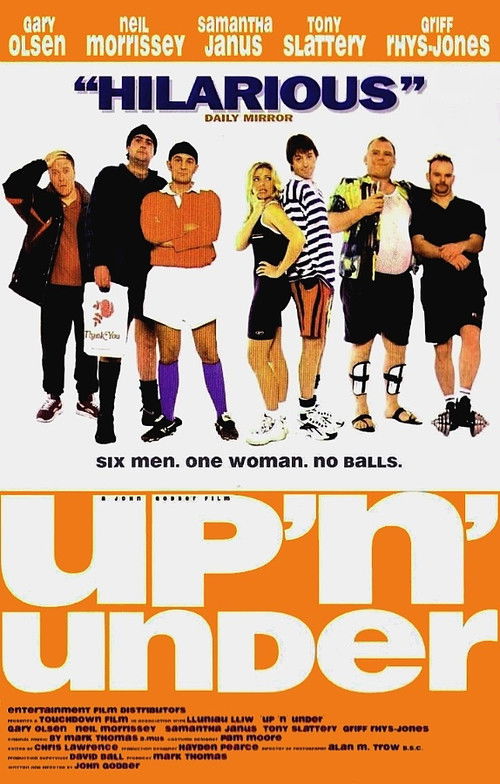
Up 'n' Under
1998
No user ratings available yet
Diversity score: 3.8 out of 10

1985
Director
Peter Smith
Runtime
99 minutes
Average Rating
No ratings yetSynopsis
It's New Year's Eve in Thatcher's de-industrialising Britain. The scene is set at a seedy bar in Liverpool where a group of Irish Protestant and Irish Catholic pensioners will gather to clash and bash the new year in.
Overall Score
Limited
Category Breakdown
LGBTQ+ Representation
The film lacks any evidence of non-cisnormative gender identities. The narrative focus remains strictly on traditional sectarian divides rather than exploring heteronormativity.
Gender Representation
The story centers on pensioners, a demographic that often reinforces traditional gender hierarchies in 1980s social realism. There is no indication of disrupted masculine leadership or diverse feminine portrayals.
Racial & Ethnic Diversity
The film explores ethnic identity through the Irish diaspora in Liverpool. It avoids a monolithic Anglo-Saxon depiction by centering on Irish Protestant and Catholic identities.
Religious & Cultural Diversity
The narrative uses religious friction to critique the systemic failures of Thatcher-era economic shifts. It provides a localized look at class and creed within a decaying industrial landscape.
Disability Representation
There is no information available regarding the presence or portrayal of visible or invisible disabilities within the character arcs.
Strengths
Areas for Improvement
AI Analysis
No Surrender serves as a period-specific social commentary on sectarianism and economic decline in Thatcher-era Britain. By centering on the Irish experience in Liverpool, the film disrupts a monolithic British identity through the lens of religious and class struggle. However, the work adheres to the demographic constraints and social hierarchies of 1985. It focuses on localized tensions between Irish Protestant and Catholic pensioners rather than utilizing modern intersectional or deconstructionist techniques. Ultimately, the film functions as a study of regional realism. It explores the friction of identity within a de-industrializing landscape without expanding into broader social or identity-based subversions.
1998
1976

1982

1984

2016

1972

2009
1970

2018

1975
2000

1985
No reviews yet. Be the first to share your thoughts on this movie!
Use the rating form above to leave a star rating and optional review.