
Merry-Go-Round
1956
No user ratings available yet
Representation score: 2.9 out of 10
Representation Score
Minimal
1942
Director
Franz Seitz
Average Rating
No ratings yetNew Showbiz Analysis
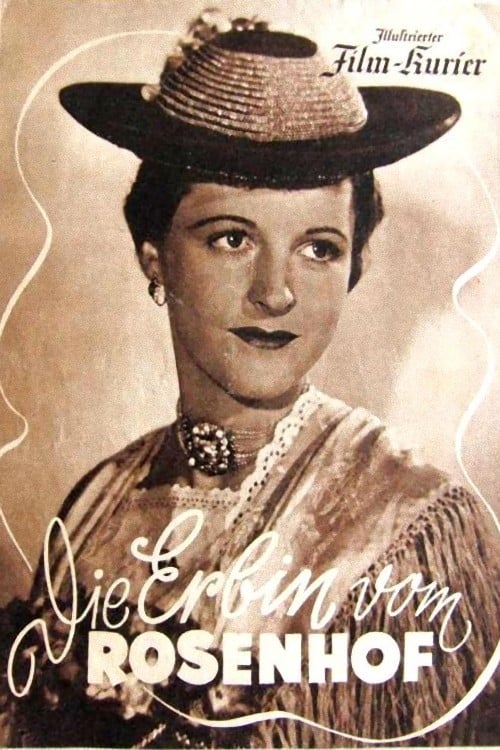
Die Erbin vom Rosenhof is a period romance that upholds the traditional social and family hierarchies of 1940s rural Bavaria. The narrative centers on local stability, inheritance, and established social roles. While the protagonist Mathias introduces progressive teaching methods, this minor disruption of authority does not extend to a broader critique of social or political structures. The film remains grounded in the conventional genre expectations of its time. Overall, the work lacks depth in representing diverse demographics, reinforcing the status quo of its specific historical and geographical context.
Category Breakdown
The film follows a strictly heterosexual romantic storyline. The main plot revolves around the romantic relationships between Mathias, Stasi, and the head teacher's daughter.
Stasi navigates her life through romantic choices within a patriarchal system. While she has some control over her decisions, it is limited to choosing a partner rather than challenging broader gender hierarchies.
The setting in an Upper Bavarian village leads to a homogeneous cast. The story focuses on a localized, ethnically uniform population with no visible racial diversity.
The story highlights traditional European social structures such as land ownership and inheritance. It reinforces the stability of local institutions like the school and the mayoral position.
There are no visible or invisible disabilities portrayed as central to the character arcs or the plot progression.
Present on Screen
Limited or Absent
Official Synopsis
A love story, which takes place in an Upper Bavarian mountain village: the young teacher Mathias is very popular among his students for his progressive methods of teaching, but his methods have aroused the displeasure of the head teacher. Stasi, the future heiress of the Rosenhof, loves Mathias. But her grandparrents have a different man in mind for her: were she to marry Sepp, the son of the mayor, who resides on the neighboring farm, the two estates could be joined together as one. When the head teacher's daughter begins to get the hots for Mathias, Stasi quickly gets prepared to marry Sepp. But then, Mathias tells her of his love for her.
1956
1931
1933

1955
2007
1946
1919
1962
No reviews yet. Be the first to share your thoughts on this movie!
Use the rating form above to leave a star rating and optional review.