
Therese and Isabelle
1968
No user ratings available yet
Representation score: 5.1 out of 10
Representation Score
Fair
1931
PGDirector
Leontine Sagan, Carl Froelich
Runtime
88 minutes
Average Rating
No ratings yetNew Showbiz Analysis
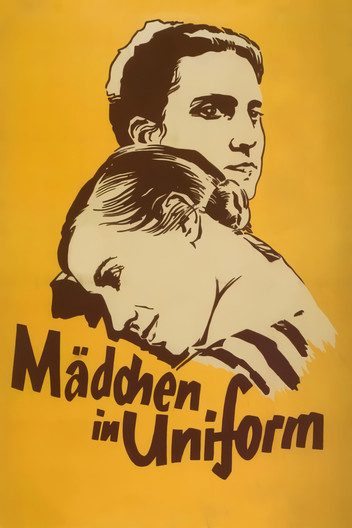
Mädchen in Uniform stands out as a groundbreaking film that challenges traditional institutions. It shines by highlighting non-straight relationships and complex female power dynamics within a tightly controlled environment. Despite its sophisticated critique of rigid systems and individual freedom, the film remains confined by its historical context. Its cast is entirely white, reflecting the era's lack of racial diversity. Overall, the film's strength lies in its deep psychological exploration and its role as a pioneering work for queer identity, while operating within a narrow ethnic framework.
Category Breakdown
The film focuses its emotional journey on non-straight relationships. Manuela's strong romantic feelings for her teacher highlight same-sex longing as a key part of the story.
This world focuses solely on women, challenging traditional hierarchies by showing conflicts between different types of female leadership. Women are shown as the main drivers of both institutional oppression and emotional rebellion.
The story takes place within a strictly white, upper-class society. Reflecting its 1931 Prussian setting, the film features a uniform European cast.
The story criticizes the Prussian emphasis on discipline and nationalism. It portrays student resistance as a necessary reclaiming of personal emotions against a strict, oppressive institution.
The film delves into intense psychological struggles and emotional vulnerability. However, it does not include specific representations of physical or neurodivergent disabilities.
Present on Screen
Limited or Absent
Official Synopsis
A sensitive girl is sent to an all-girls boarding school and develops a romantic attachment to one of her teachers.
1968

1969

1951

1989

2009

1971

1978

1948
No reviews yet. Be the first to share your thoughts on this movie!
Use the rating form above to leave a star rating and optional review.