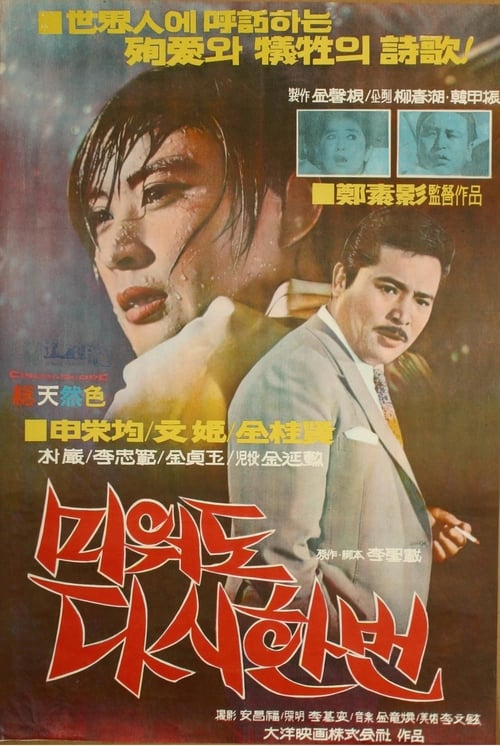
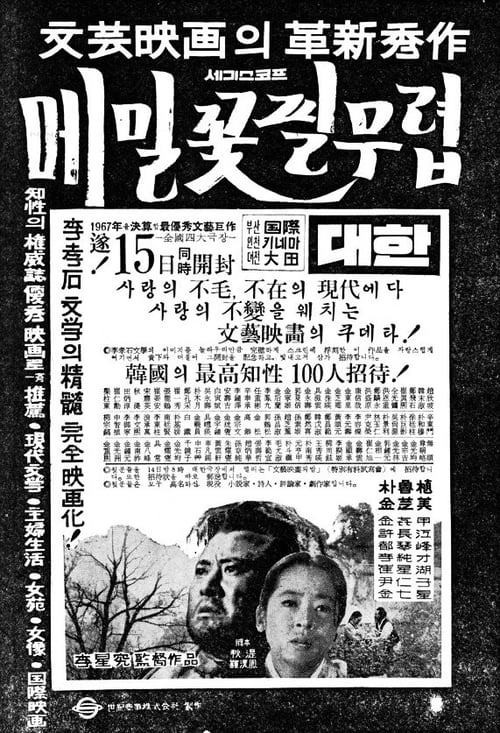
Love Me Once Again
1968
No user ratings available yet
Representation score: 3.0 out of 10
Representation Score
Limited
1967
Director
Lee Seong-gu
Runtime
96 minutes
Average Rating
No ratings yetNew Showbiz Analysis
This 1967 drama is a traditional period piece rooted in mid-century Korean realism. It prioritizes classical storytelling clichés, focusing on memory, lost love, and the discovery of a biological son. The film operates within a conventional framework, lacking the complexities or critiques found in more progressive modern cinema. Its themes center on personal history and lineage. While it provides a culturally specific Korean perspective, the narrative remains largely homogenous and adheres to the social hierarchies of its time.
Category Breakdown
The film follows a traditional romantic storyline centered around the protagonist's past relationship with a woman. It does not include any depictions of non-traditional gender identities or critiques of conventional romantic structures.
The story centers on a male protagonist's emotional journey and discovery of his biological son. The female character, Bun, primarily serves as a catalyst for his memories and does not have a fully independent role.
As a Korean production, the film offers a culturally specific perspective. It presents a homogeneous narrative typical of its era and origin, without incorporating diverse cultural intersections.
The narrative emphasizes traditional sentimentality and the importance of family lineage. It focuses on emotional connections and continuity within established social structures.
No visible or invisible disabilities are shown. The protagonist's left-handedness serves as a biological marker for familial recognition, rather than depicting a disability.
Present on Screen
Limited or Absent
Official Synopsis
Heo, an itinerary market dealer, had a short and passionate love with a girl called Bun when he was young and still cherishes that memory in his heart. One day, he happens to meet a young market dealer who is left-handed like him. While talking to him, he finds out that the man is actually his son.
1968
1962

2013
1957
2020

2011
1961

2015
No reviews yet. Be the first to share your thoughts on this movie!
Use the rating form above to leave a star rating and optional review.