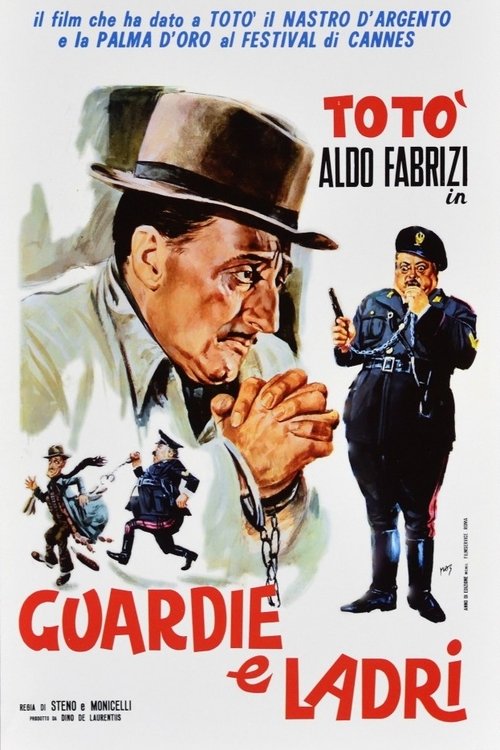
Cops and Robbers
1951
No user ratings available yet
Representation score: 2.0 out of 10
Representation Score
Limited
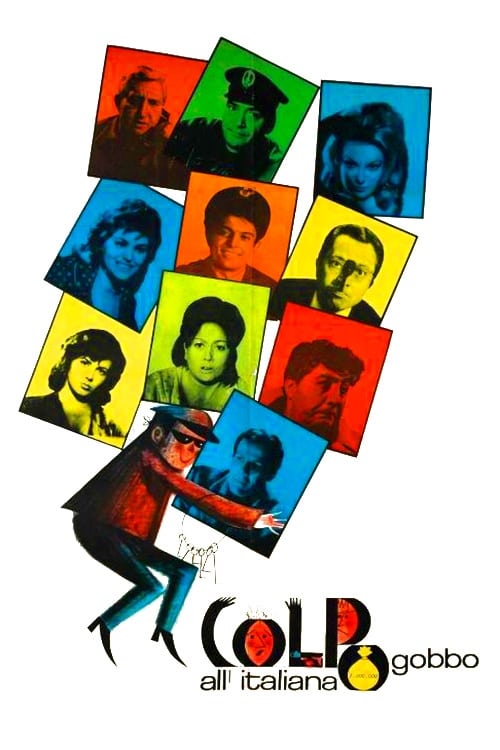
1962
Director
Lucio Fulci
Runtime
100 minutes
Average Rating
No ratings yetNew Showbiz Analysis
Lucio Fulci’s early comedy operates within the traditional framework of 1960s Italian genre cinema. The film serves as a conventional period piece that adheres to the established social and narrative norms of its time. The narrative lacks structural complexity or intentional disruption of traditional hierarchies. Instead, it relies on standard formulas, such as the aesthetic framing of women and the focus on domestic order. Ultimately, the film reflects the demographic and social homogeneity of its era, offering little in the way of diverse representation.
Category Breakdown
The film does not include any characters with non-traditional gender identities. It focuses on a domestic conflict between a husband and wife, reflecting the social norms of the 1960s.
Female characters are portrayed mainly through their physical appearance, described as a 'blonde and beautiful woman.' The plot revolves around male-led institutions rather than giving women significant roles.
Set in Rome, the film reflects the homogeneous demographics typical of Italian productions from that era. There is no indication of diverse casting beyond the standard social norms of the time.
The story centers on well-established social institutions like the police and the traditional family structure. It aligns with traditional Western social structures without providing a critical perspective.
There are no visible or invisible disabilities mentioned or depicted among the characters.
Present on Screen
Limited or Absent
Official Synopsis
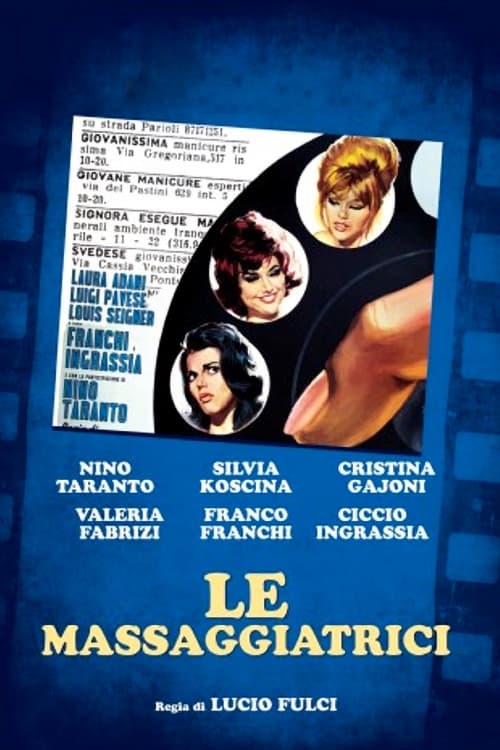
Orazio Menicotti is a night policeman in Rome. One night he is present at a quarrel between husband and wife and he volunteers to take the wife to the Police Station. While he goes around Rome with the blonde and beautiful woman, a bank is robbed.
1951
1977
1966
1965
1967
1962
1982
1958
No reviews yet. Be the first to share your thoughts on this movie!
Use the rating form above to leave a star rating and optional review.