
Demonstone
1990
No user ratings available yet
Representation score: 3.3 out of 10
Representation Score
Fair
2008
Director
Park Hee-jun
Runtime
87 minutes
Average Rating
No ratings yetNew Showbiz Analysis
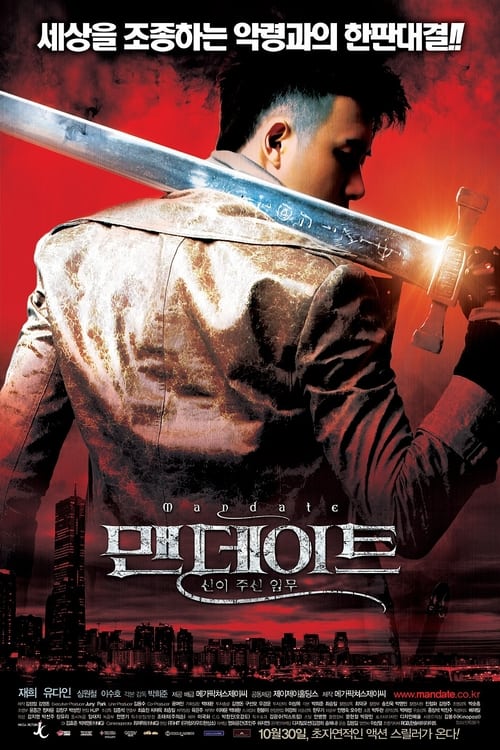
Mandate: Mission from the Gods follows the conventions of South Korean action-horror. The narrative relies on established genre clichés, emphasizing supernatural tension over social commentary. The film centers on male investigative roles and female characters who primarily face trauma. While it critiques local law enforcement, it does not challenge traditional social hierarchies or offer diverse representation. Ultimately, the work serves as a localized supernatural thriller. It lacks the complexity to address intricate identity issues, resulting in a typical genre-focused approach.
Category Breakdown
The film does not include any explicit LGBTQ+ characters or narratives. The story revolves around supernatural investigations and gender-based violence, sticking to traditional assumptions about relationships.
Female characters play a crucial role in driving the plot through their victimization. However, the investigative efforts are mainly centered on male protagonists, reinforcing traditional gender roles.
As a South Korean production, the film features a culturally homogeneous cast. The narrative remains localized within a specific village, limiting broader ethnic the way different parts of someone's identity overlap.
The story explores themes of justice and institutional failure through a supernatural lens. It focuses on the battle between good and evil without addressing broader social issues.
The film does not portray characters with disabilities taking active roles. There are no neurodivergent or physically disabled characters influencing the narrative.
Present on Screen
Limited or Absent
Official Synopsis
The Whagoklee village, there has been a continuous serial rape murder cases in the past decade. The police has not yet outlined any of it and villagers have left one by one, the town is almost now in ruins. The police abandoned the case and nothing was happened for two years, the town became peaceable again. Then one day, the fear swept over the town with the result an incident that two college women were raped and murdered. CHOI Kang a ghost hunter insisted that it was not by a man but by an evil spirit, as opposed to a police. Another ghost hunter Mr. SHIN that is a press man also came to the village for being after it. The evil which is only visible to CHOI Kang and Mr. SHIN committed a murder by having a string on people. Guess who the real criminal is and what's going to happen next.
1990

2017

2006
2000

2005
2014

2025

2018
No reviews yet. Be the first to share your thoughts on this movie!
Use the rating form above to leave a star rating and optional review.