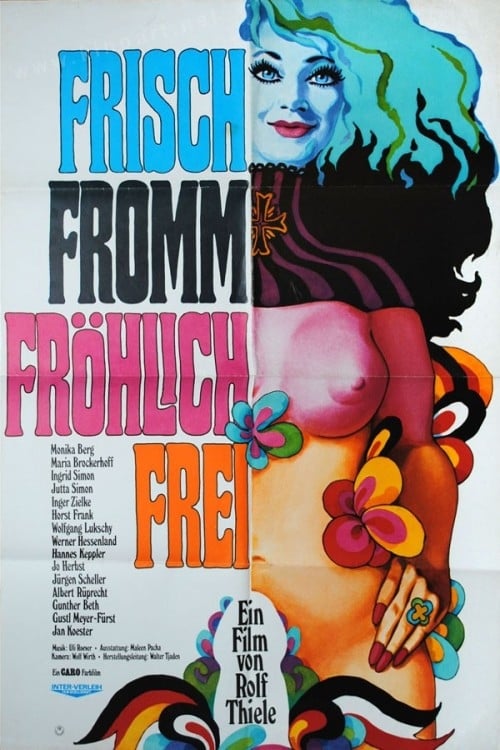
Frisch, fromm, fröhlich, frei
1970
No user ratings available yet
Representation score: 4.3 out of 10
Representation Score
Limited
1970
Director
Rolf Thiele
Average Rating
No ratings yetNew Showbiz Analysis
Rolf Thiele’s comedy serves as a period-specific exploration of sexual liberation and the deconstruction of conservative social norms. It captures a cinematic shift toward individual autonomy and secularism common in the 1970s. However, the film lacks multi-layered breadth. Its focus remains narrow, centered on European social upheaval rather than broad demographic inclusivity or diverse identities. The narrative architecture prioritizes the subversion of traditional decorum through humor, yet it stays within the bounds of a highly homogeneous, Eurocentric social context.
Category Breakdown
The film likely explores non-traditional relationships through a 1970s lens. However, it seems to favor straight-centered sexual liberation over deep queer narratives or the way different parts of someone's identity overlap.
Women's ability to drive the story through sexual autonomy challenges mid-century domesticity. While it subverts male authority, the film remains tied to the era's specific cinematic male gaze.
The production reflects a highly homogeneous European cast. There is no evidence of racial blending or non-white protagonists, focusing instead on localized, Eurocentric social dynamics.
The narrative critiques traditional Western morality and bourgeois restraint. It aligns with a post-war shift toward secularism by focusing on pleasure and unconventional lifestyles in Vienna.
There is no documented evidence regarding the inclusion or portrayal of characters with physical or neurodivergent disabilities.
Present on Screen
Limited or Absent
1970
1985
1961
1991
1964

1970
1973
1964
No reviews yet. Be the first to share your thoughts on this movie!
Use the rating form above to leave a star rating and optional review.