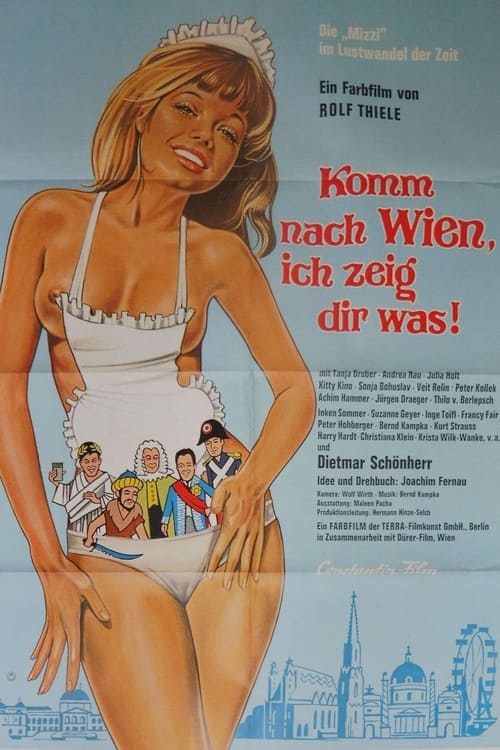
Komm nach Wien, ich zeig dir was!
1970
No user ratings available yet
Representation score: 3.6 out of 10
Representation Score
Fair
1970
Director
Rolf Thiele
Average Rating
No ratings yetNew Showbiz Analysis
Rolf Thiele's satire effectively dismantles the rigid social structures of the Third Reich. By presenting the state as corrupt, the film emphasizes individual survival over state-imposed loyalty, offering a strong anti-authoritarian viewpoint. However, the film's historical setting limits racial and ethnic diversity. While women are shown as active agents, the narrative doesn't fully break down patriarchal structures, and LGBTQ+ representation is mostly indirect.
Category Breakdown
The film doesn't have clear LGBTQ+ storylines or positive portrayals of non-straight identities. However, its satire of strict conformity during the Third Reich period indirectly challenges the era's rigid straight-focused norms.
Women in the film take active roles in both their personal lives and society, showing strength and independence in a restrictive environment.
The cast mainly consists of white actors, reflecting the historically homogeneous population of Nazi Germany.
The movie excels at criticizing oppressive systems and state-enforced morality. It uses satire to point out the absurdities of absolute power and institutional dogma.
There is no significant depiction of physical or neurodivergent disabilities in the film.
Present on Screen
Limited or Absent
1970
1991
1964
1964
1961
1967
1964
1950
No reviews yet. Be the first to share your thoughts on this movie!
Use the rating form above to leave a star rating and optional review.