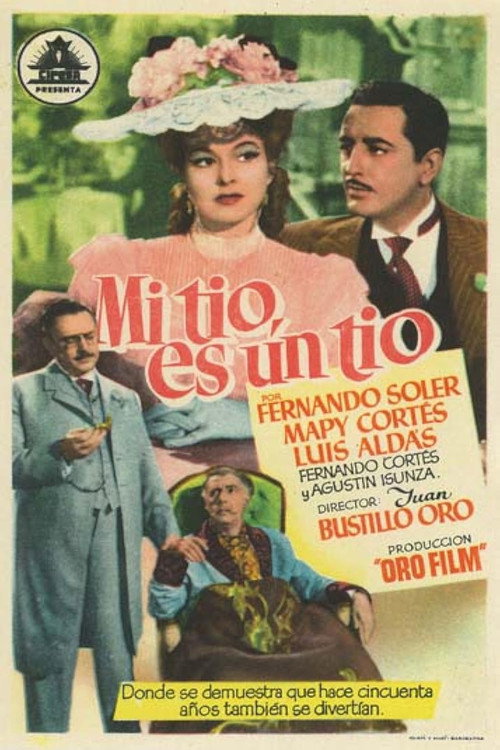
Las tandas del principal
1949
No user ratings available yet
Representation score: 1.8 out of 10
Representation Score
Fair
1966
Director
Juan Bustillo Oro
Runtime
115 minutes
Average Rating
No ratings yetNew Showbiz Analysis
The film provides a nuanced exploration of social mobility and the fluidity of identity. By focusing on a woman's strategic actions to protect her child, it challenges the era's typical depiction of passive domesticity. Though the film lacks LGBTQ+ representation and does not address disability, it successfully challenges traditional hierarchies. The narrative leverages class-based perceptions to redefine the concept of a 'legitimate' family unit. However, it remains anchored in conventional straight-centered structures.
Category Breakdown
The film does not include any visible LGBTQ+ characters or explore non-traditional sexual or gender identities. The main storyline focuses on a traditional romantic relationship and biological inheritance.
The female lead plays a crucial role in driving the narrative. She uses complex social manipulation to protect her child and challenge patriarchal definitions of legitimacy.
Produced within Mexico's film industry, the film features a primarily Hispanic cast. It operates within a cultural context that counters Anglo-centric cinematic norms.
The story challenges Western ideas of honor by emphasizing situational ethics over strict institutional rules. Social deception is portrayed as a means for preserving family integrity.
There are no characters with physical or neurodivergent disabilities. The narrative centers on social and domestic themes.
Present on Screen
Limited or Absent
Official Synopsis
Unmarried opera singer has a baby, and her friends convince her to pass it off as the grandchild of a wealthy old lady.
1949

1938

1961
1963
1965
1941
1967
1951
No reviews yet. Be the first to share your thoughts on this movie!
Use the rating form above to leave a star rating and optional review.