
A Macabre Legacy
1939
No user ratings available yet
Representation score: 2.8 out of 10
Representation Score
Limited
1932
Director
Richard Oswald
Runtime
89 minutes
Average Rating
No ratings yetNew Showbiz Analysis
The Living Dead is a product of its time, reflecting the social and demographic norms of Weimar-era German cinema. The film prioritizes a psychological study of individual transgression over exploring identity or challenging social hierarchies. Despite the director's interest in controversial subjects, the film's structure remains traditional. It centers on a male scientist's destructive actions, leaving little room for diverse perspectives or the subversion of established norms. Ultimately, the film serves as a character study of obsession. It lacks the complexity needed to address multiple aspects of identity or to challenge the homogeneity of its era.
Category Breakdown
The film does not include any representation of LGBTQ+ identities or same-sex relationships. It follows the assumption that everyone is straight and cisgender.
The story focuses on male characters and their intellectual pursuits. Female characters are limited to tragic roles defined by their connection to the male protagonist.
The film reflects the demographics of early 1930s German cinema. There are no non-white characters or racial diversity in the cast.
The movie explores moral questions through science and ethics. It challenges traditional beliefs but does not criticize societal institutions.
The film includes themes of reanimation and medical experiments. However, characters with disabilities have little influence over the plot and are sidelined.
Present on Screen
Limited or Absent
Official Synopsis
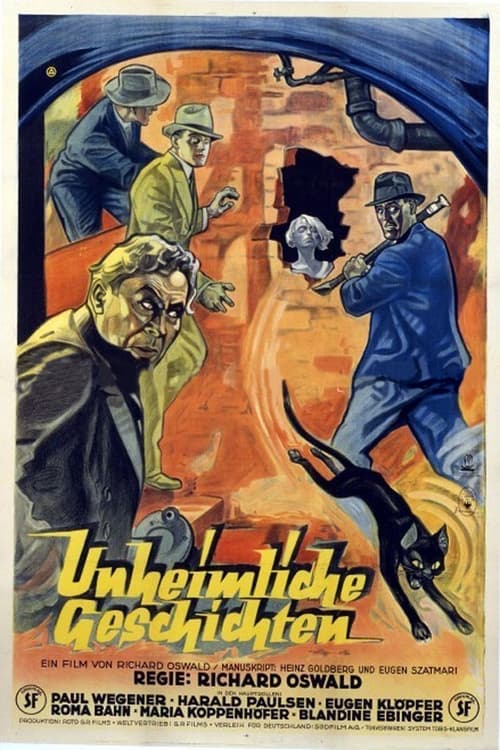
A crazed scientist murders his wife, walls her up, then flees. A reporter sets out to track him down. Remake of Unheimliche Geschichten (Richard Oswald, 1919).
1939
1928

1936

1933
1915
1935
1932

1924
No reviews yet. Be the first to share your thoughts on this movie!
Use the rating form above to leave a star rating and optional review.